

1
Protection
👁️
Evil Eye (Middle East)
Middle East
A blue glass bead charm that reflects the envious gaze before it can cause harm.
4.8Learn more →

Middle East
7 charms from this country
Iraq is the cradle of civilization where the world's first recorded lucky-charm traditions originated in ancient Sumer, Babylon, and Assyria. The Assyrian evil eye tradition is among the oldest on earth — cylinder seals engraved with protective eyes date back four thousand years. Modern Iraqi culture, both Arab and Kurdish, centers on protection against the evil eye (ayn al-hasad) through blue beads, Quranic amulets, and the hand of Fatima.
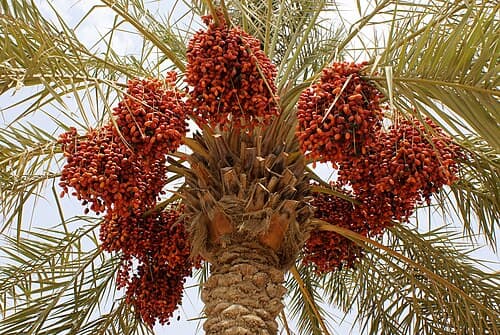
The date palm — the tree of life of ancient Mesopotamia and the most prolific food tree of the Iraqi landscape — carries ancient associations with prosperity and divine favor that persist in folklore. The crescent moon is central to Shia Islamic identity here, and the hand of Abbas (a variant of the hamsa) carries specific Shia devotional meaning.
Middle East
A blue glass bead charm that reflects the envious gaze before it can cause harm.
Middle East
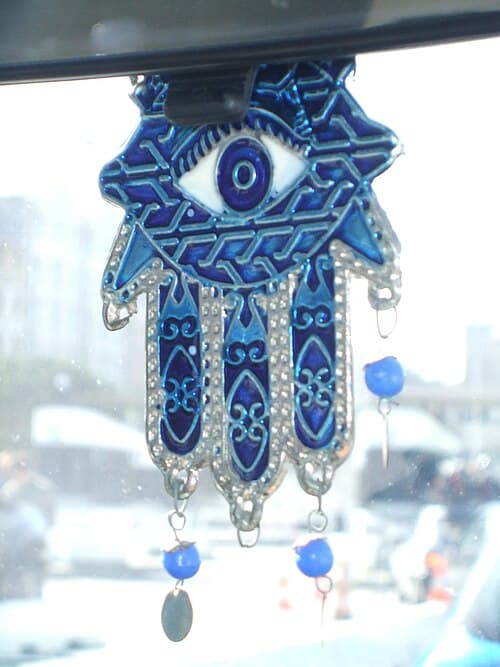
An open palm amulet warding off the evil eye across Middle Eastern and North African cultures.
Middle East / North Africa
The sacred open palm named for the Prophet Muhammad's daughter, a cornerstone of Islamic protective symbolism.
Middle East
The tree of life of the desert, symbol of abundance in arid lands and the most generous of all Arabic trees.

Middle East
The crescent moon and star, a symbol of Islamic faith found on mosques, flags, and protective amulets across the Muslim world.

Middle East
Thirty-three or ninety-nine beads used to count the ninety-nine names of Allah and cultivate mindful devotion.
Iraq
A symbol of ancient Mesopotamian abundance — Iraq once had 30 million date palms and was the world's largest date exporter.

