

190
Wealth
☕
Arabian Dallah (Coffee Pot)
Saudi Arabia / UAE / Qatar / Kuwait
The iconic long-spouted Arabic coffee pot, a symbol of Gulf hospitality, generosity, and the sacred social ritual of coffee.
4.5Learn more →

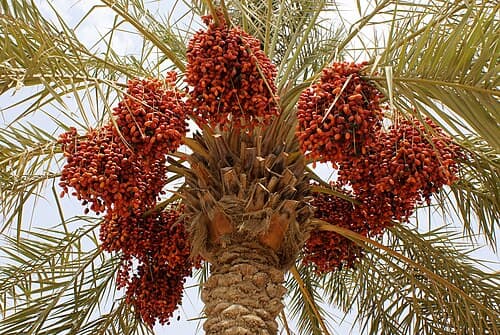
The tree of life of the desert, symbol of abundance in arid lands and the most generous of all Arabic trees.
The date palm (Phoenix dactylifera) is one of the most important plants in human history, having sustained desert civilizations for at least 7,000 years and earning the honorific 'tree of life' across the cultures of the Middle East and North Africa. A single mature date palm can produce 100-200 kilograms of dates per year for over a century, providing calories, vitamins, and natural sugars in a form perfectly suited to desert preservation and transport. The palm's gifts extend beyond its fruit: the fronds provide shade and building material, the trunk provides timber, the seeds can feed camels, and the sap can be fermented into palm wine — nothing is wasted, everything given.
In Islamic tradition the date palm holds extraordinary significance — the Prophet Muhammad is reported to have said that the date palm is the best of trees, that it was created from the same clay as Adam, and that the believer is like the palm tree: always giving, always generous, always upright. Breaking the Ramadan fast is traditionally done with dates and water, the same simple food with which the Prophet ended his own fasts. The Quran mentions the date palm more than any other plant — 22 times — making it the most sacred tree in Islamic scripture.
Date palm charms are particularly meaningful gifts in Arabic-speaking countries, especially for Ramadan, Eid, and occasions celebrating generosity and abundance. They carry the energy of desert resilience — the ability to thrive where nothing else can and to give abundantly even in the most inhospitable conditions.
Abundance from unlikely places, generosity as a way of life, spiritual sustenance, and the ability to provide everything needed to those who take shelter beneath you. The date palm is what it means to be a blessing to others.
Display a date palm charm in a home or garden to attract abundance and invite the spirit of generous provision. Gift for Ramadan or Eid as a symbol of the season's spiritual generosity. Place in a business to encourage prosperity that flows from genuine service. Eat dates mindfully as a connecting practice to this ancient sustaining tradition.
The date palm appears on the flags or emblems of seven countries: Saudi Arabia, Iraq, Kuwait, Bahrain, Palestine, Western Sahara, and the UAE — more national symbols than any other plant in the world, testifying to its cultural centrality across the region.
The Prophet Muhammad reportedly broke his fast with dates and water, making this practice Sunnah (prophetic tradition). Dates are also nutritionally ideal for breaking a fast — their simple sugars provide immediate energy, their fiber is gentle on an empty stomach, and they are filling without being heavy. Practical wisdom and spiritual tradition align perfectly.
Date palms can live and produce fruit for over 150 years, with some ancient specimens believed to be over 200 years old still producing dates. The Methuselah date palm germinated in 2005 from a 2,000-year-old seed found at Masada, Israel, and is now producing flowers — making it the oldest germinated seed in recorded history.
Dates are mentioned as a blessed food in the Quran, and Islamic tradition recommends eating an odd number of dates (particularly seven) in the morning. They are eaten at Islamic celebrations, given as gifts, offered to guests as a sign of welcome, and used medicinally in traditional Islamic medicine (Unani tibb). They are the quintessential 'Islamic food.'
Saudi Arabia / UAE / Qatar / Kuwait
The iconic long-spouted Arabic coffee pot, a symbol of Gulf hospitality, generosity, and the sacred social ritual of coffee.
Iraq
A symbol of ancient Mesopotamian abundance — Iraq once had 30 million date palms and was the world's largest date exporter.

UAE
A gold coin charm honoring the UAE's transformation from pearl-diving desert nation to global economic powerhouse.

