

90
Health
✨
Mexican Milagros
Mexico (Catholic folk tradition)
Small metal votive charms placed on saint statues or shrines to request miracles or give thanks for prayers answered.
4.7Learn more →


The sacred tree resin burned in Mesoamerican ceremonies for thousands of years, carrying prayers to the divine and purifying all it touches.
Copal is a resinous tree sap harvested from several species of trees in the Burseraceae family, burned as incense in Mesoamerican ritual practice for at least 3,000 years. In Aztec religion, copal was the incense of the gods — burned at every major ceremony, offered to Tlaloc for rain, to Tonatiuh the sun god, to Quetzalcoatl, and burned continuously in the sacred precinct of Tenochtitlan. The Aztec word for copal, copalli, gave it the Spanish name that traveled around the world. When the Spanish conquered Mexico, they found copal so deeply embedded in indigenous religious practice that they attempted to replace it with imported frankincense — an attempt that largely failed, as copal remained the ritual incense of Mexican folk Catholicism.
Today, copal is burned in Catholic churches across Mexico alongside frankincense, offered on Día de los Muertos altars to nourish the spirits of the dead, used by curanderos (folk healers) to purify patients and spaces, and burned in contemporary Aztec dance (Danza) ceremonies to open sacred space. The white smoke of copal is understood as a direct carrier of prayers — smoke rising from earth to sky, from human to divine.
Small chunks of raw copal resin or copal incense cones/sticks make powerful cleansing and protective charms. Carrying raw copal resin in a medicine bag purifies the surrounding energy field. Burning copal regularly in a home is understood to clear accumulated negative energy and invite beneficial ancestral presence.
Copal represents the oldest continuous prayer technology in the Americas — the act of transforming something precious from the earth into smoke that rises to the divine. It embodies purification, sacred communication, and the presence of ancestral and divine energies invited through fragrance. Burning copal is understood as feeding the spirits, maintaining relationship with the unseen world, and keeping one's personal energy field clean and protected.
Burn copal on a charcoal disk in a heat-safe dish or censer, or use copal incense sticks or cones. Walk through your home with burning copal, paying special attention to corners and doorways where stagnant energy collects. Burn copal during prayer, meditation, or ancestor work. Carry a small piece of raw copal resin in your pocket or medicine bag as a protective cleansing charm.
Copal was so important to the Aztec state religion that it was collected as tribute from conquered peoples — the Aztec tribute rolls record specific quantities of copal balls required from different city-states. Archaeologists have found copal residue in offering caches at major Mesoamerican sites dating back to 900 BCE, making it one of the oldest continuously used ritual substances in the Western hemisphere.
Both are tree resins burned as sacred incense, but they come from different plants and smell distinctly different. Frankincense (Boswellia) has a warm, balsamic, slightly medicinal scent associated with Middle Eastern and Christian ritual. Copal has a lighter, sweeter, citrusy-pine scent that is more transparent and clean. Copal was used in the Americas independently of any Old World influence.
Mexican botanicas, metaphysical shops, and international grocery stores often carry copal in resin, cone, and stick form. Mexican and Latin American grocery stores frequently stock copal for Día de los Muertos season. For raw resin, search for 'copal blanco' (white copal) or 'copal negro' (black copal) — each has a slightly different scent and traditional use.
Burn copal with good ventilation — open windows or work near an exhaust fan. Copal smoke is cleaner than many commercial incenses and does not contain synthetic fragrances, but any smoke can irritate respiratory systems in poorly ventilated spaces. People with asthma should use caution. Never leave burning incense unattended.
Mexico (Catholic folk tradition)
Small metal votive charms placed on saint statues or shrines to request miracles or give thanks for prayers answered.

Mexico (Aztec/Mexica civilization)
A replica of the great Mexica calendar stone, representing cosmic time, solar power, and the cyclical nature of all creation.
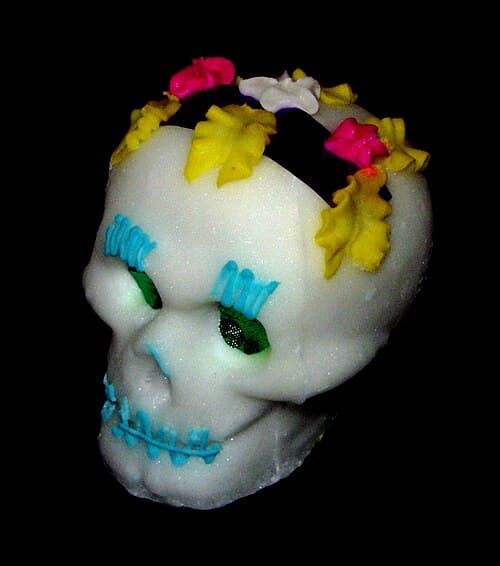
Mexico
A decorated sugar skull that honors the dead during Día de los Muertos, celebrating the joyful reunion between the living and their beloved ancestors.

