

90
Health
✨
Mexican Milagros
Mexico (Catholic folk tradition)
Small metal votive charms placed on saint statues or shrines to request miracles or give thanks for prayers answered.
4.7Learn more →

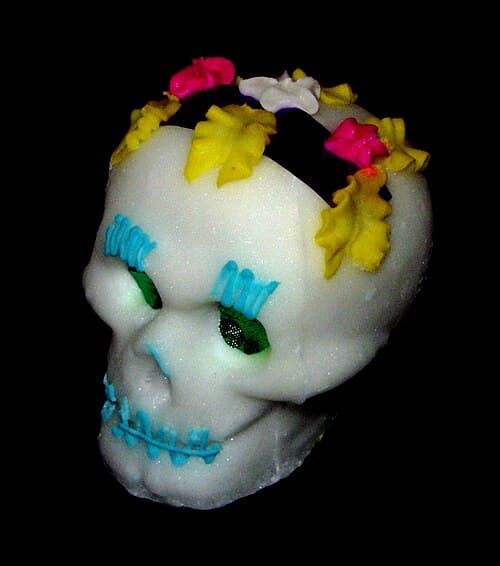
A decorated sugar skull that honors the dead during Día de los Muertos, celebrating the joyful reunion between the living and their beloved ancestors.
The calavera — decorated skull — is the most recognizable symbol of Día de los Muertos, Mexico's most iconic cultural celebration observed on November 1st and 2nd. Far from being a macabre or morbid symbol, the decorated skull in Mexican tradition represents a radical celebration of life through the acceptance of death, and the joyful belief that the dead never truly leave us. The pre-Columbian Aztec goddess Mictecacihuatl, Lady of the Dead, was depicted as a skeletal figure draped in stars who presided over the festival of the dead in the month corresponding to late October, and her imagery merged with Catholic All Saints' and All Souls' Day to create Día de los Muertos.
Sugar skulls, elaborately decorated with flowers, colored icing, tinfoil, and the name of the deceased written on the forehead, are placed on ofrendas (altars) to welcome the returning spirits of the dead. The skulls are often bright and festive — decorated with marigolds, butterflies, and geometric patterns that make them objects of beauty rather than horror. The tradition of personalizing each skull with the dead person's name transforms the abstract fear of death into the specific grief and love for a particular individual.
As luck and protective charms, calavera imagery has spread far beyond Mexico's Día de los Muertos context into year-round jewelry, tattoo art, and popular culture globally. Wearing skull imagery in the Mexican tradition carries a very different energy from other skull symbolism — it is about celebrating those who came before, acknowledging the continuity of love beyond death, and embracing life fully precisely because you know it ends.
The calavera represents the Mexican philosophical tradition of accepting death as part of life rather than fearing or denying it. It honors ancestors and the dead as continuing presences in the lives of the living. It carries the protective power of beloved ancestors invoked with joy, and the courage that comes from making peace with mortality — allowing one to live more fully, love more boldly, and fear less.
Wear calavera jewelry or carry a decorated skull charm to maintain connection with ancestors and to embody the Día de los Muertos spirit of celebrating life through remembrance of death. Place a sugar skull or skull figurine on your home altar during late October and November with a photo of a beloved deceased person. Use calavera imagery as a reminder to live fully in the present.
The tradition of the literary calavera — satirical poems written in the voice of the dead, mocking the living — is a beloved Mexican journalism and poetry tradition. During Día de los Muertos, Mexican newspapers have historically published calavera poems mocking politicians, celebrities, and public figures, a unique form of social commentary that uses death as the great equalizer.
Mexican cultural leaders and scholars have mixed opinions on this. Many welcome respectful participation that includes genuine learning about the tradition's indigenous and Catholic roots, building authentic ofrendas to real deceased loved ones, and engaging with Mexican artists and communities. What is discouraged is treating it as a Halloween theme or costume party without cultural understanding.
A calavera is any skull decoration used in Día de los Muertos practice. La Catrina is a specific iconic figure — a skull dressed in elegant European fashion, created in 1910 by Mexican artist José Guadalupe Posada as political satire, then named 'La Catrina' by muralist Diego Rivera. La Catrina has since become the face of Día de los Muertos globally.
Sugar skull molds are widely available online. The traditional recipe combines granulated sugar with meringue powder and water to create a moldable paste that hardens as it dries. Once dry, decorate with royal icing, foil paper, and plastic jewels. Writing the name of a loved one on the forehead transforms it from decoration to personal memorial.
Mexico (Catholic folk tradition)
Small metal votive charms placed on saint statues or shrines to request miracles or give thanks for prayers answered.

Mexico
The most venerated Catholic image in the Americas — the dark-skinned Virgin who appeared to Juan Diego in 1531, patroness of Mexico and all the Americas.

Mexico
The flower of the dead — cempasúchil — whose brilliant orange blooms guide departed souls home during Día de los Muertos.

