

92
Protection
🙏
Our Lady of Guadalupe Medal
Mexico
The most venerated Catholic image in the Americas — the dark-skinned Virgin who appeared to Juan Diego in 1531, patroness of Mexico and all the Americas.
4.9Learn more →


Small metal votive charms placed on saint statues or shrines to request miracles or give thanks for prayers answered.
Milagros — the Spanish word for miracles — are small ex-voto charms made of metal, most commonly silver, tin, or gold-colored alloy, fashioned in the shapes of body parts, animals, people, vehicles, houses, and other objects significant to prayers and requests. In Mexico's vibrant Catholic folk tradition, milagros are pinned or tied to the clothing or body of a beloved saint's statue, attached to retablo paintings, or woven into the hair of the Virgin Mary's image as specific requests for intervention or as grateful acknowledgments of prayers answered.
The tradition has roots in both pre-Columbian Mesoamerican votive offerings and the Spanish Catholic practice of ex-votos, creating a distinctly Mexican synthesis. A person with a knee ailment might pin a small knee milagro to the Virgin of Guadalupe's cloak. A new homeowner might attach a tiny house. A farmer seeking rain might offer a cloud charm. A mother worried about her child might attach a small child figure. The specificity of the request matches the specificity of the charm, making milagros one of the most direct and personal prayer technologies in the Americas.
Today, milagros have transcended their purely religious context and are used as jewelry and artistic elements by people of all backgrounds who appreciate their symbolic directness and their connection to the folk Catholic aesthetic. They appear on necklaces, earrings, shadow box art, and in the work of artists like Frida Kahlo, who incorporated milagros into her famous self-portraits alongside imagery of personal suffering and survival.
Milagros represent the direct, specific conversation between a person and the divine — not a vague general prayer but a precise request or expression of gratitude. They embody the Catholic folk understanding that the saints are active intercessors who respond to particular needs, and that prayers made concrete through physical offerings are more likely to be heard. They represent faith translated into action.
Choose a milagro that represents your specific prayer — a heart for love or cardiac health, a leg for mobility, a house for home blessings, an eye for clear vision or protection from the evil eye. Hold it in your hands and speak your prayer specifically and earnestly. Pin it to an image of your patron saint, place it on your personal altar, or carry it in your pocket as a portable prayer.
The Basilica of Our Lady of Guadalupe in Mexico City is decorated with thousands upon thousands of milagros left by pilgrims over centuries. Some of the oldest milagros on record date to colonial Mexico in the 1600s. The tradition of leaving votive offerings at sacred sites, however, stretches back to pre-Columbian Aztec temples where similar small figurines were left at the feet of deities.
Absolutely. Milagros come in every shape imaginable — animals for prayers related to pets or livestock, vehicles for safe travel, houses for home blessings, dollar signs or coins for financial prayers, the sun for healing, and hearts for every kind of love prayer. If you can't find the right shape, a handmade paper or clay version with sincere intention works just as well.
While milagros originated in Catholic folk tradition, many people across spiritual backgrounds use them as symbolic prayer tools. The power lies in the concrete specificity of stating your need through a physical object. You can direct your milagro prayer to whatever divine force you believe in — the saints are not the only possible recipients.
In traditional practice, you leave the milagro permanently at the shrine as a testament to the miracle received. Others keep their answered-prayer milagros as gratitude tokens. You might also give the milagro to someone who faces a similar challenge, passing along the answered prayer energy.
Mexico
The most venerated Catholic image in the Americas — the dark-skinned Virgin who appeared to Juan Diego in 1531, patroness of Mexico and all the Americas.
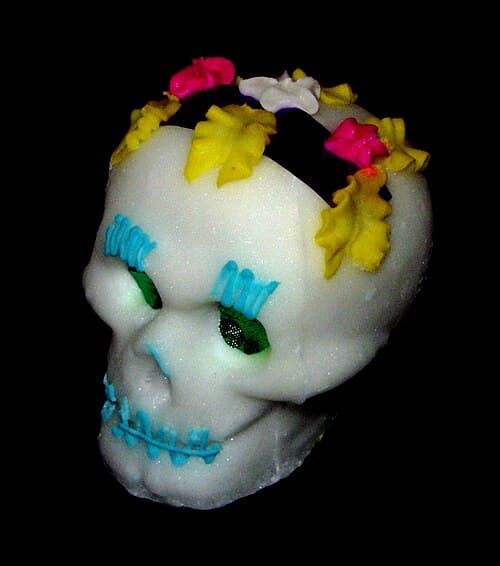
Mexico
A decorated sugar skull that honors the dead during Día de los Muertos, celebrating the joyful reunion between the living and their beloved ancestors.

Huichol people, Mexico
A cross-shaped weaving of yarn on two sticks, representing the protective eye of the divine watching over and guarding the home.

