

1
Protection
👁️
Evil Eye (Middle East)
Middle East
A blue glass bead charm that reflects the envious gaze before it can cause harm.
4.8Learn more →

Middle East
12 charms from this country
Turkey is the world capital of the evil eye, home to the nazar boncuğu — the iconic cobalt-blue glass eye bead that is perhaps the most exported amulet on earth. These beads are given at births, hung at doorways, attached to babies and animals, and gifted to new homeowners and businesses. The belief that an envious gaze can cause harm, illness, and misfortune is deeply rooted in Turkish folk culture and predates Islam in Anatolia.
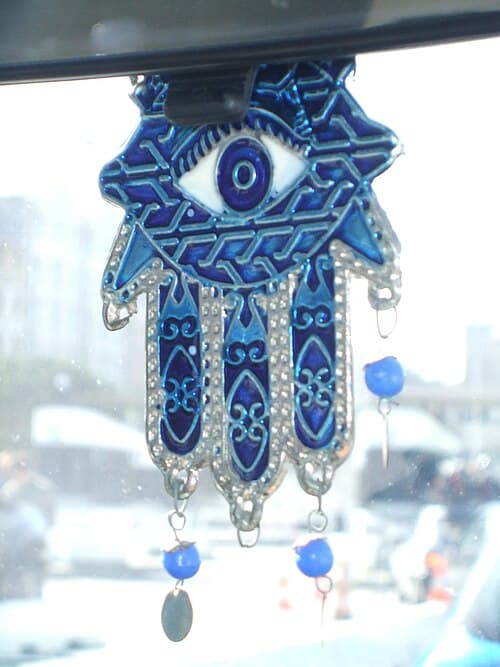
The hamsa hand (known locally as khamsa or Fatma'nın Eli) is equally popular as a wall decoration and jewelry piece. Turkish coffee cup reading (tasseography) is a beloved folk art used to divine fortune. The blue evil eye motif appears woven into kilim carpets, hammered into copper, and blown into glass in the bazaars of Istanbul, Izmir, and Cappadocia. The crescent moon and star of the Ottoman imperial flag remain powerful symbols of blessing.
Middle East
A blue glass bead charm that reflects the envious gaze before it can cause harm.
Middle East
An open palm amulet warding off the evil eye across Middle Eastern and North African cultures.
Middle East / North Africa
The sacred open palm named for the Prophet Muhammad's daughter, a cornerstone of Islamic protective symbolism.
Turkey
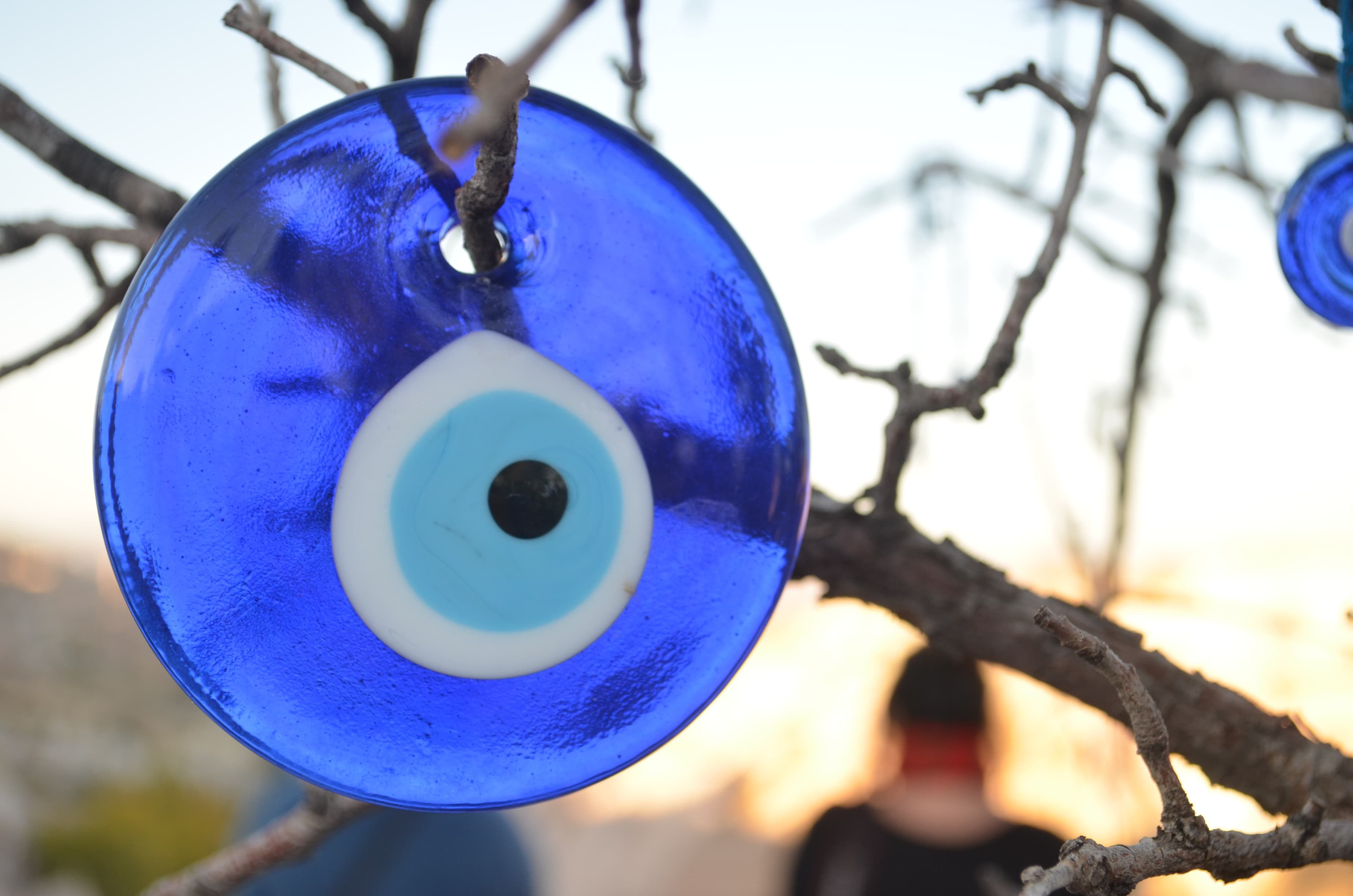
Turkey's iconic blue glass evil eye bead — the nazar boncuğu — protecting against the destructive gaze of envy.

Turkey
The iconic Iznik ceramic tile with flowing tulip design — a masterpiece of Ottoman decorative art that brings divine beauty into any space.
Turkey
The open hand of protection in Turkish Iznik ceramic tradition — a symbol crossing Islamic, Jewish, and Christian blessing.
Turkey
Branches hung with hundreds of nazar beads — Turkey's most spectacular evil eye installation protecting community spaces.

Turkey
The Sufi mystic in white who spins to merge with the divine — a symbol of spiritual elevation and love's transformative power.

Turkey
The Ottoman empire's sacred flower — the tulip that conquered Europe — symbol of divine beauty and perfect love.

Middle East
The crescent moon and star, a symbol of Islamic faith found on mosques, flags, and protective amulets across the Muslim world.

Middle East
Thirty-three or ninety-nine beads used to count the ninety-nine names of Allah and cultivate mindful devotion.
Middle East / North Africa
A miniature of Islamic architecture's most stunning art form, carrying the protective power of geometric perfection.

