
420
Wealth
🪙
Lucky Coins (I-Ching)
China
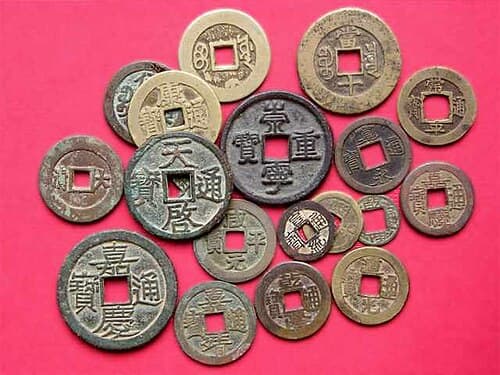
Ancient Chinese coins with square holes, tied in groups of three with red string, are powerful feng shui wealth activators connecting the circular heavens with the square earth.
4.5Learn more →

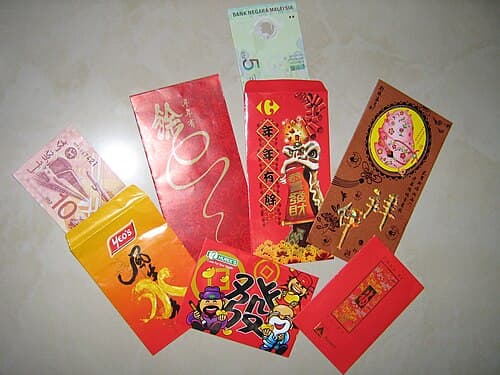
The red envelope (hongbao) is China's most universal good-fortune gift, transferring luck and blessings along with cash at every major life celebration.
The red envelope — known as hongbao in Mandarin, lai see in Cantonese, and lì xì in Vietnamese — is the central vehicle for gifting luck and money at major life events across East and Southeast Asian cultures. The red paper itself is the charm: red being the color of fire, vitality, and the defeat of evil in Chinese symbolism, the envelope acts as a spiritually charged container that transforms ordinary currency into a blessing-laden gift. The act of giving and receiving red envelopes during Chinese New Year, weddings, graduations, and birthdays is not merely financial but a ritual exchange of positive energy and goodwill.
The origins of the red envelope tradition are rooted in a legend about a demon called Sui who would touch sleeping children on the head, causing fever and lifelong weakness. Parents in ancient China stayed awake all night to guard their children, and one year eight immortals disguised as coins circled a sleeping child to protect it from Sui. The parents wrapped these coins in red paper and placed them under the child's pillow; when Sui approached and was repelled by the red glow, the protective power of red-wrapped money was established forever. The tradition evolved from coins to paper currency but the fundamental spiritual logic — that red-wrapped money carries protective and luck-generating power — remained constant.
In the digital age, the red envelope has undergone a remarkable transformation. WeChat's digital hongbao feature, launched in 2014, processed over one billion digital red envelope transactions in the first 24 hours of Chinese New Year 2015, fundamentally reshaping how the tradition operates. Despite this digitization, physical red envelopes remain preferred for weddings and major occasions, as the tactile ritual of presenting and receiving the physical envelope is considered part of the blessing itself.
Prosperity flowing between generations, the defeat of misfortune through the power of red, blessings sealed within community bonds, and wealth given with genuine good wishes.
Gift red envelopes containing cash (always in even amounts — odd amounts are associated with funerals) at Chinese New Year, weddings, and major birthdays. The amount should be appropriate to the relationship; ending in 8 is especially auspicious. Give and receive with both hands as a mark of respect. Do not open the envelope immediately in front of the giver.
In 2021, Alibaba's Alipay and Tencent's WeChat processed over 8 billion digital red envelope transactions in the week surrounding Chinese New Year — making digital hongbao one of the largest single financial phenomena in human history by transaction volume.
Always use even numbers; odd numbers are associated with mourning. Numbers containing 8 (88, 168, 888) are especially lucky. Numbers containing 4 are avoided. For Chinese New Year, amounts between relatives vary widely; for weddings, the amount should at minimum cover the cost of your seat at the reception.
Traditional etiquette says each envelope should be used once. However, with modern decorative versions, some families reuse particularly beautiful envelopes for display purposes. The cash inside is always fresh currency — giving used or crumpled notes is considered inauspicious.
Yes, the tradition has spread widely and is welcomed as a sign of respect and goodwill when given with understanding of its meaning. The key is to give with sincerity and follow the basic conventions of even amounts and respectful two-handed presentation.
China
Ancient Chinese coins with square holes, tied in groups of three with red string, are powerful feng shui wealth activators connecting the circular heavens with the square earth.

China
The Laughing Buddha — the round, joyful, sack-carrying monk — is China's most beloved symbol of happiness, wealth, and the simple abundance that comes from contentment.

China
Goldfish have been symbols of wealth and abundance in China for over a thousand years, their gold color and fluid movement embodying the easy flow of prosperity.

China
The gold sycee ingot — the boat-shaped gold and silver currency of imperial China — is the most direct and universally recognized symbol of accumulated financial wealth in the Chinese tradition.

