

12
Wealth
🎋
Lucky Bamboo
China
Lucky Bamboo is a feng shui staple believed to bring good fortune, prosperity, and positive energy when placed in the home or office.
4.5Learn more →


Goldfish have been symbols of wealth and abundance in China for over a thousand years, their gold color and fluid movement embodying the easy flow of prosperity.
The goldfish carries one of the most linguistically elegant luck associations in Chinese culture: the Mandarin word for goldfish (jin yu) is a homophone for 'gold in abundance' (金玉). This phonetic coincidence, taken entirely seriously in a culture that considers sound symbolism deeply meaningful, elevated the goldfish from a common pond creature to a living wealth charm. By the Tang dynasty, goldfish were being selectively bred in China specifically for their ornamental value, making them among the first animals in history to be domesticated for purely aesthetic and symbolic purposes rather than food.
In feng shui practice, an aquarium of goldfish is considered one of the most effective wealth activators available. Moving water represents the flow of chi and money; gold-colored fish swimming energetically through clear water creates a powerful visual metaphor for wealth circulating freely. The recommended number is nine fish in total: eight gold or orange fish (representing prosperity and the earth element) and one black fish (to absorb any negative energy before it can harm the household). If a fish dies, it is not mourned as bad luck but rather interpreted as the fish having absorbed a negative fate that would otherwise have afflicted the family.
Goldfish imagery appears throughout Chinese decorative arts — on porcelain, silk embroidery, paper cuts, and New Year paintings. Pairs of goldfish are one of the Eight Auspicious Symbols of Buddhism, representing freedom, fertility, and the happiness of swimming freely through the sea of existence without fear. As New Year decorations, goldfish paintings and figurines are displayed to invite a year in which wealth moves as naturally and freely as fish through water.
Abundance flowing freely, wealth without obstruction, fertility and multiplication of good fortune, freedom from financial anxiety, and the gold of heaven made visible.
Keep a live goldfish aquarium in the wealth area of your home (far left corner from the main entrance) or in the living room — never in the bedroom or kitchen. An aquarium of nine fish (eight gold, one black) is the classic feng shui prescription. Alternatively, place a painting or figurine of goldfish in the same area. Keep the water clear and the fish healthy.
Goldfish were selectively bred in China for over a thousand years before Europeans ever saw them; when they were brought to Europe in the 17th century, they caused an immediate sensation and became a status symbol among European aristocracy who had never encountered a domesticated fish bred purely for beauty.
In feng shui tradition, a dead goldfish is actually interpreted as a positive sign: the fish sacrificed itself to absorb a negative energy or misfortune that was headed toward the household. Replace the fish promptly to maintain the protective and wealth-attracting energy of the aquarium.
Live fish are considered more energetically potent because their movement generates active chi. However, a well-maintained aquarium with realistic artificial fish is accepted by many modern feng shui practitioners as a reasonable substitute for those who cannot care for live fish. The key is keeping the water clean and circulating.
Color is the primary consideration: gold, orange, and red are most auspicious for wealth. Black is used for protection. Koi are considered even more powerful than goldfish for wealth purposes, but require larger tanks. The fish should swim actively — lethargic fish are considered a negative sign.
China
Lucky Bamboo is a feng shui staple believed to bring good fortune, prosperity, and positive energy when placed in the home or office.
China
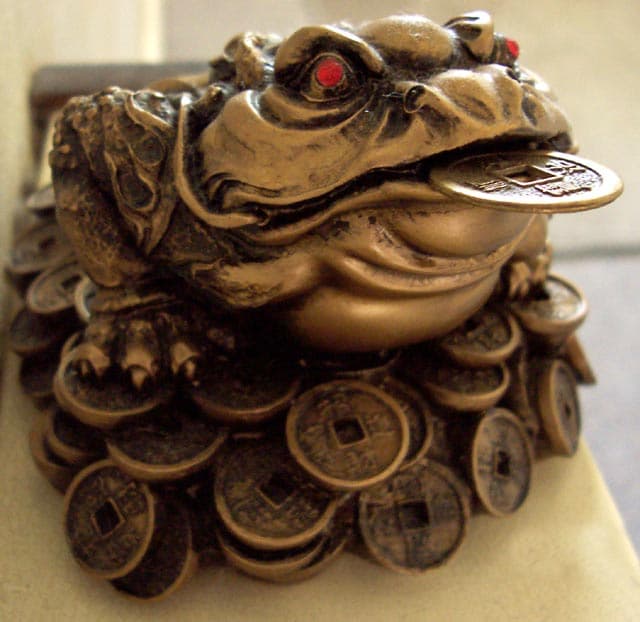
The three-legged toad sitting on coins with a coin in its mouth is one of feng shui's most potent wealth activators, said to attract money and prevent it from leaving.

China
Two fish swimming in perfect parallel is one of the Eight Auspicious Symbols of Buddhism and China's most ancient emblem of love, fertility, and the harmonious joy of partnership.

China
The Laughing Buddha — the round, joyful, sack-carrying monk — is China's most beloved symbol of happiness, wealth, and the simple abundance that comes from contentment.

