

10
Wealth
🐘
Elephant (Indian)
India
The sacred elephant symbolizes wisdom, prosperity, and the removal of obstacles across South and Southeast Asia.
4.8Learn more →

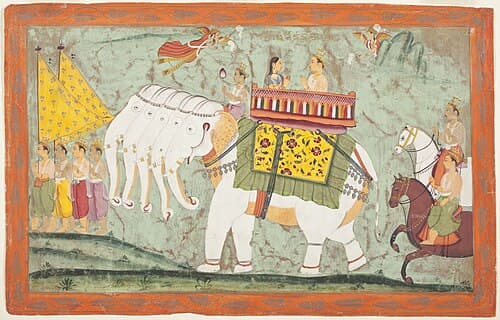
The divine three-headed elephant Erawan serves as the mount of Indra and a supreme symbol of royal power and cosmic protection.
Erawan (the Thai name for the Vedic divine elephant Airavata) is the three-headed white elephant who serves as the mount of Indra, the king of the gods and ruler of the heavens. In Thai cosmology, Erawan emerged from the cosmic churning of the ocean of milk (the same primordial event that produced Lakshmi, amrita, and other divine gifts) and has served as Indra's vehicle across multiple cosmic cycles. The three heads represent the three realms of existence (heaven, earth, and the underworld), the three levels of the universe (above, middle, and below), and Indra's sovereignty across all three.
The most famous Erawan representation in the world is the Erawan Shrine in central Bangkok — officially a shrine to the Hindu god Brahma (Phra Phrom), but named for the elephant associated with the site's deity. This shrine attracts millions of visitors and devotees annually and has become one of the most photographed sites in Bangkok. Offerings at the Erawan Shrine include wooden elephants, traditional dance performances commissioned to fulfill vows, and elaborate garlands of jasmine and marigold.
Erawan appears extensively in Thai royal symbolism, on official seals, and in temple murals throughout the country. His three trunks are sometimes depicted holding lotuses, representing the sovereignty of the divine over all realms of existence. As a personal talisman, an Erawan figurine or medallion provides protection from all directions, connects the wearer to royal and divine authority, and channels the specifically powerful energy of Indra — the god of thunder, rain, and righteous war — into the bearer's protection.
Supreme cosmic protection, royal authority, sovereignty across all three realms, and the specific power of Indra's divine energy manifest in physical form.
Place an Erawan figurine in the home or business altar facing the main entrance for maximum protection. Offer flowers and incense. For personal protection, carry an Erawan amulet or medal. Visit the Erawan Shrine in Bangkok and commission a traditional dance performance if a major prayer has been answered — this is the traditional way of fulfilling a vow.
The Erawan Shrine in Bangkok was rebuilt in 1956 following a series of construction accidents at the Erawan Hotel. A Brahmin priest consulted about the accidents identified the land's spiritual guardian as a powerful deity requiring a shrine. Within days of the shrine's construction, the accidents stopped — and the shrine has been maintained and expanded ever since, outlasting the hotel itself.
Erawan/Airavata is an Indian Vedic concept that spread throughout Southeast Asia with Brahmanical religion. The same divine elephant appears as Airavata in India, as Erawan in Thailand, as Erawan in Laos, and as Eyravoan in Cambodia. Thailand has made the three-headed variant its own, but the root concept is shared across the region.
The association derives from the Vedic concept of the white elephant as a symbol of divine favor and cosmic authority. The historical reality of elephants as military assets reinforced this — kingdoms that controlled trained war elephants held significant military advantage. The combination of cosmic symbolism and practical military power made elephants the supreme symbol of royal authority across the region.
When devotees pray at the Erawan Shrine with a specific request and their wish is granted, they traditionally commission a performance of traditional Thai dance by professional dancers maintained by the shrine. The dance is an offering of beauty and artistry to the deity in exchange for the grace received. This practice of fulfilling vows through artistic offerings is an ancient Hindu tradition preserved in Thai Buddhism.
India
The sacred elephant symbolizes wisdom, prosperity, and the removal of obstacles across South and Southeast Asia.

Thailand
The four-faced Brahma deity is Thailand's most widely venerated Hindu god, granting wishes to all who pray with sincere hearts.

Thailand
A miniature dwelling placed outside Thai homes and businesses to house the property's protective spirit and maintain good relations with the spirit world.

Thailand
Thailand's goddess of prosperity and good fortune, Nang Kwak beckons customers and wealth with her raised right hand.

