

22
Success
🐉
Dragon
China
The Chinese dragon is the supreme symbol of imperial power, auspicious fortune, and the dynamic yang energy that drives all achievement and transformation.
4.8Learn more →

Southeast Asia
6 charms from this country
Laos is a deeply Buddhist country where the wats (temples) are the center of community life and the source of auspicious blessings. The baci (sou khuan) ceremony — in which white cotton threads are tied around the wrists of the honored guest by elders and monks — is the most distinctive Lao lucky-charm ritual, summoning the soul's spirits back to the body and wishing the recipient health, prosperity, and safe travels.
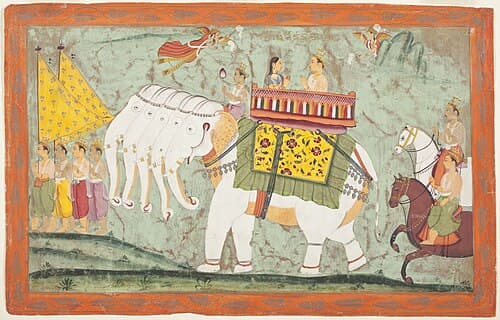
The naga, the mythical river serpent, holds special significance in Laos as the protector of the Mekong River. The three-headed elephant (Erawan) featured on the old royal flag is considered the luckiest of all animals. Prayer beads and lotus offerings are everyday components of Lao devotional life, and the dharma wheel appears on temples, flags, and household altars.
China
The Chinese dragon is the supreme symbol of imperial power, auspicious fortune, and the dynamic yang energy that drives all achievement and transformation.

India
A string of 108 prayer beads used for mantra repetition, mala beads align the practitioner's energy with divine intention through meditative counting.

India
The eight-spoked wheel represents the Buddha's Noble Eightfold Path and the turning of cosmic law, one of the most universal Buddhist symbols.
Thailand
The divine three-headed elephant Erawan serves as the mount of Indra and a supreme symbol of royal power and cosmic protection.

Thailand
A miniature dwelling placed outside Thai homes and businesses to house the property's protective spirit and maintain good relations with the spirit world.
Thailand
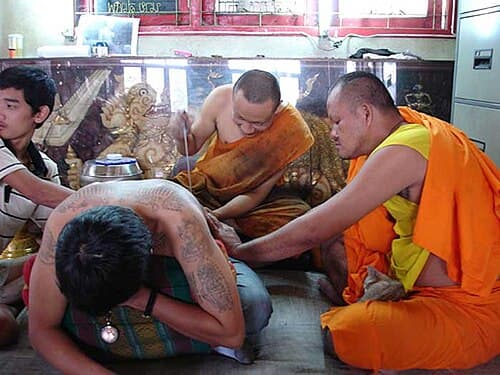
Sacred geometric tattoos blessed by monks carry the power of the inscribed formulas directly on the body as permanent living talismans.

