
170
Protection
🐘
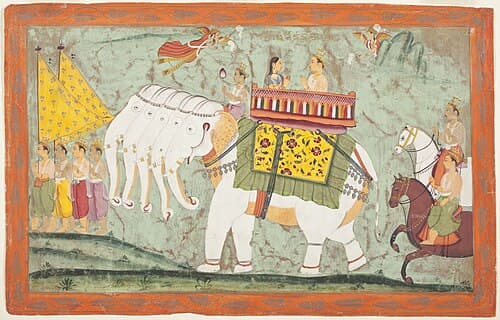
Erawan (Three-Headed Elephant)
Thailand
The divine three-headed elephant Erawan serves as the mount of Indra and a supreme symbol of royal power and cosmic protection.
4.6Learn more →


The four-faced Brahma deity is Thailand's most widely venerated Hindu god, granting wishes to all who pray with sincere hearts.
Phra Phrom is the Thai name for Brahma, the Hindu creator god, adapted and thoroughly integrated into Thai popular religion as one of the most powerful wish-granting deities in the Thai spiritual universe. Unlike in India where Brahma worship has declined sharply (there are only a handful of Brahma temples in all of India), in Thailand Phra Phrom has become a major object of popular devotion. The four faces of Phra Phrom represent his all-seeing omniscience, watching over all four cardinal directions simultaneously and hearing prayers from every quarter.
The most famous Phra Phrom in the world is the Erawan Shrine's golden statue in central Bangkok, which draws millions of visitors annually, including people from every nation and religion. The deity's reputation for genuinely granting wishes — particularly for health, protection, and success in business — has spread far beyond Thai culture. The shrine became internationally famous in 2006 when a mentally disturbed individual smashed the statue with a hammer; by the time authorities arrived, an angry crowd had beaten him to death on the spot — an extreme illustration of how personally Thais identify with this deity's protection.
Phra Phrom statues are found at the entrances of five-star hotels, shopping centers, and government buildings throughout Thailand, reflecting a seamless integration of the divine into commercial and civic life that characterizes Thai religious culture. Home shrines to Phra Phrom are maintained in dedicated corners of many Thai households, with offerings of pink roses (his specific flower), elephant figurines, and wooden dancers maintained with meticulous daily care.
All-seeing divine wisdom, omnidirectional protection, creation and ordering of the cosmos, and the power to grant sincere prayers across all domains of life.
Bow and offer incense before a Phra Phrom statue or image when making important requests. Traditional offerings include pink roses, elephant figurines, incense, candles, and small wooden dancing figures. State your request clearly and sincerely. When your wish is granted, fulfill your vow — typically by returning to the original shrine with promised offerings.
Pink roses are specifically associated with Phra Phrom in Thai tradition because of an obscure legend about the deity's pleasure at this particular flower. As a result, the cut flower market around Bangkok's major Phra Phrom shrines is dominated by pink rose sellers — a minor economic ecosystem sustained entirely by this theological preference.
In India, a mythology developed in which Brahma was cursed by Shiva to be unworshiped, following a dispute in which Brahma was deemed to have lied. No such curse appears in Thai religious narratives. Thai Brahma worship likely preserves an older South and Southeast Asian tradition of Brahma veneration that predates this curse mythology's dominance in India.
Phra Phrom is considered a general wish-granting deity who can be petitioned for almost anything. Thai devotees pray for health, business success, family harmony, safe travel, and protection from enemies. The only traditional caution is against making selfish requests that harm others — Phra Phrom's four-faced omniscience is said to see through deception.
Vows to Phra Phrom are traditionally fulfilled at the same shrine where they were made. The most common fulfillment at the Erawan Shrine involves commissioning a performance of traditional Thai dance from the shrine's resident dance troupe. The number of dancers and performances depends on the magnitude of the wish granted. Other forms of fulfillment include special food offerings and gold leaf applications.
Thailand
The divine three-headed elephant Erawan serves as the mount of Indra and a supreme symbol of royal power and cosmic protection.

Thailand
A miniature dwelling placed outside Thai homes and businesses to house the property's protective spirit and maintain good relations with the spirit world.

Thailand
Thailand's goddess of prosperity and good fortune, Nang Kwak beckons customers and wealth with her raised right hand.

India
The elephant-headed Hindu deity Ganesha is the remover of obstacles and the lord of new beginnings.

