

34
Success
🐘
Ganesha Figurine
India
The elephant-headed Hindu deity Ganesha is the remover of obstacles and the lord of new beginnings.
4.9Learn more →


The sacred elephant symbolizes wisdom, prosperity, and the removal of obstacles across South and Southeast Asia.
The elephant holds an unparalleled position of reverence across South and Southeast Asia, functioning as a living symbol of divine power and earthly abundance. In Hindu tradition, the elephant is most directly associated with Ganesha, the elephant-headed deity who governs beginnings, wisdom, and the removal of obstacles. Statues of elephants placed at the entrance of homes and temples are believed to guard the threshold and invite prosperity inward, while their sheer physical grandeur evokes the inexhaustible wealth of the natural world.
In practical folk tradition, a figurine of an elephant with its trunk raised is considered especially auspicious because the raised trunk mimics the gesture of greeting and blessing. Households across India, Sri Lanka, and Thailand keep small elephant figurines near their front doors or on home altars, believing that the animal's legendary memory ensures blessings are never forgotten. Elephant motifs appear extensively in temple carvings, wedding textiles, and royal insignia, reinforcing the creature's status as a bridge between the human and the divine.
The elephant's association with rain clouds and the monsoon in ancient Vedic literature further deepened its link to fertility and agricultural prosperity. Indra, the god of thunder and rain, rides the white elephant Airavata, connecting the animal to the life-giving waters that sustain civilization. Carrying a small elephant charm or placing one in a prominent area of the home is thought to draw these same blessings of abundance and steady fortune into everyday life.
Wisdom, prosperity, strength, removal of obstacles, and divine protection. A raised trunk specifically signals incoming good luck and blessings.
Place a figurine near your front door with the trunk facing outward to welcome good fortune. For personal carry, choose a small silver or brass pendant. Avoid placing the elephant on the floor or in the bathroom, as this is considered disrespectful to the symbolism it carries.
In Thailand, the white elephant is so sacred that any white elephant born in the country automatically becomes the property of the king. Historically, a ruler's power was measured partly by how many white elephants he owned.
Yes. An elephant facing the front door is said to protect the home and welcome guests. One facing inward toward the house is believed to shower the interior with blessings and prosperity.
The raised trunk is more universally associated with good luck in popular belief, but many Hindu scholars note that a lowered trunk represents grounded strength and steadiness — both interpretations are considered positive.
Brass, sandalwood, and jade are all considered auspicious. Brass is most common in Indian households; jade is preferred in Southeast Asian traditions. Avoid plastic for ritual purposes.
India
The elephant-headed Hindu deity Ganesha is the remover of obstacles and the lord of new beginnings.
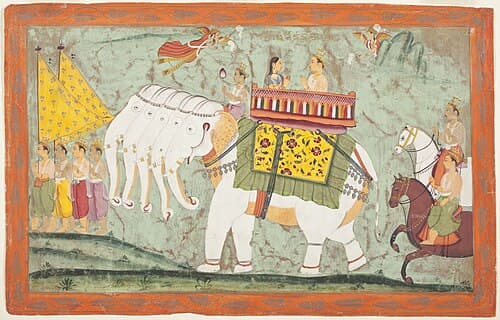
Thailand
The divine three-headed elephant Erawan serves as the mount of Indra and a supreme symbol of royal power and cosmic protection.

Thailand
A miniature dwelling placed outside Thai homes and businesses to house the property's protective spirit and maintain good relations with the spirit world.
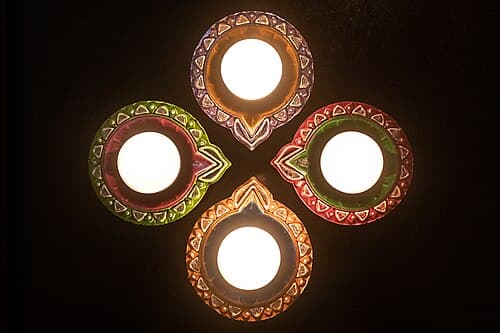
India
The clay oil lamp is the most fundamental symbol of the dispelling of darkness and the inviting of divine light into one's life.

