

26
Love
🌸
Rose Quartz
Brazil
The stone of unconditional love, carried as the most universal charm for opening the heart to romantic love, self-love, and compassionate healing.
4.9Learn more →

Millions of people around the world use crystals for healing and wellbeing. But what does the research actually say? We examine the evidence honestly — and find a more nuanced story than either believers or sceptics typically tell.
The global crystal market is worth billions of dollars and growing rapidly. Amethyst clusters crowd windowsills in urban apartments; rose quartz rollers appear in beauty routines from Stockholm to Seoul; citrine pyramids sit on executive desks in Manhattan and Shanghai. Whether purchased from a metaphysical shop or a mainstream retailer, crystals have moved from New Age fringe to mainstream lifestyle accessory in the span of a generation.
This raises a genuinely interesting question: what does science actually say about crystal healing? The answer is more nuanced — and more fascinating — than either enthusiastic believers or dismissive sceptics typically acknowledge.
Crystal healing is based on several overlapping belief frameworks:
Vibrational resonance: Crystals are said to vibrate at specific frequencies that interact with the human body's own electromagnetic field, correcting imbalances that manifest as illness or emotional distress.
Colour therapy principles: The colour of a crystal is often linked to specific healing properties, drawing on the broader tradition of chromotherapy (colour healing) that appears in Ayurvedic, Chinese, and Western alternative medicine.
Mineral composition: Some traditions link the specific minerals in a crystal to organs or body systems — iron-rich stones for blood, calcium-containing stones for bones, silicon dioxide (quartz) for energetic clarity.
Geological history: Crystals formed over millions of years under intense geological pressure are said to have accumulated vast reserves of earth energy that can be transferred to their human holders.
Here is the scientific picture, stated honestly:
No peer-reviewed, double-blind study has found that crystals produce healing effects through any of the vibrational or energetic mechanisms described above. The most cited study, by British psychologist Christopher French and colleagues (2001), gave participants either real crystals or fake plastic crystals and asked them to meditate with them. Both groups reported the same range of sensations — warmth, tingling, heightened wellbeing — at nearly identical rates.
French concluded that the sensations people experience with crystals are the product of suggestion and expectation rather than any property of the crystals themselves. If you expect to feel something, you will — regardless of whether the object is a million-year-old amethyst or a plastic replica.
This finding is often presented as debunking crystal healing entirely. But this misunderstands the placebo effect. Research over the past two decades has established that:
When someone meditates daily with an amethyst while focusing on reducing anxiety, they are engaging in:
These are not trivial benefits. They are precisely the components of effective therapeutic practice — even if the crystal itself contributes nothing beyond being a beautiful anchor for the practice.
Some crystal healing claims have partial physical grounding worth noting:
Piezoelectricity: Quartz crystals genuinely do produce small electrical charges when mechanically stressed (compressed or bent). This is the basis of quartz watches, ultrasound machines, and many industrial sensors. However, the amounts produced by simply holding a crystal are vanishingly small and have not been shown to affect human physiology.
Far-infrared radiation: Some stones, when warmed, do emit far-infrared radiation in wavelengths that penetrate human tissue. Far-infrared saunas are used in mainstream wellness and have some evidence for cardiovascular and pain-relief benefits. Warmed stone therapy (as used in hot stone massage) may engage similar mechanisms.
Mineral transfer: Some traditional healing practices apply crystals directly to the skin or dissolve them in water (gem elixirs). Certain minerals in crystals, if absorbed through the skin or ingested, could theoretically have physiological effects — but this is also potentially toxic, since many crystals contain heavy metals or other substances that are harmful in quantity. Crystal elixirs are generally not recommended from a safety standpoint.
Research on who uses crystals and why reveals a population that is, on average, more educated and health-conscious than non-users, more likely to engage in other wellness practices (yoga, meditation, dietary awareness), and more likely to report high subjective wellbeing. This does not prove crystals cause wellbeing — it is equally plausible that people who are already wellness-oriented are more drawn to crystals.
However, it does suggest that crystal practice tends to cluster with other evidence-based wellness behaviours, and that the overall lifestyle context matters.
The most scientifically defensible framing for crystal healing is that crystals function as mindfulness objects — physical anchors for contemplative and intentional practice that would otherwise be difficult to maintain in the noise of daily life.
Research on object-mediated mindfulness (a term from therapeutic practice, not crystal healing specifically) shows that tangible objects associated with specific intentions or practices serve as powerful behavioural cues. Seeing or touching the object retriggering the associated mental state without requiring conscious effort.
In this model:
None of this requires belief in the crystal's inherent properties. It requires only the human capacity to form associations between objects and mental states — one of the oldest and most reliable features of our psychology.
Crystal healing, in its strongest claims — that specific crystals produce specific physiological effects through vibrational or energetic mechanisms — is not supported by scientific evidence.
Crystal practice, understood as a system of mindfulness, intentionality, ritual, and beauty that helps people focus their attention on health and wellbeing goals — has real and measurable value that conventional science can explain and endorse.
The wisest approach may be to enjoy crystals fully for what they demonstrably offer — beauty, tactile pleasure, meaningful ritual, and psychological focus — while treating claims about their direct healing powers as inspiring metaphors rather than literal physics.
And if your amethyst makes you feel calmer, your rose quartz makes you feel more loving, and your citrine makes you feel more prosperous? By the standards of outcomes that matter most to your health and happiness, it might not make much difference whether it is the crystal or the belief that is doing the work.
Brazil
The stone of unconditional love, carried as the most universal charm for opening the heart to romantic love, self-love, and compassionate healing.

Brazil
The golden abundance crystal, known as the Merchant's Stone, carried to attract wealth, success, and the warm energy of solar prosperity.
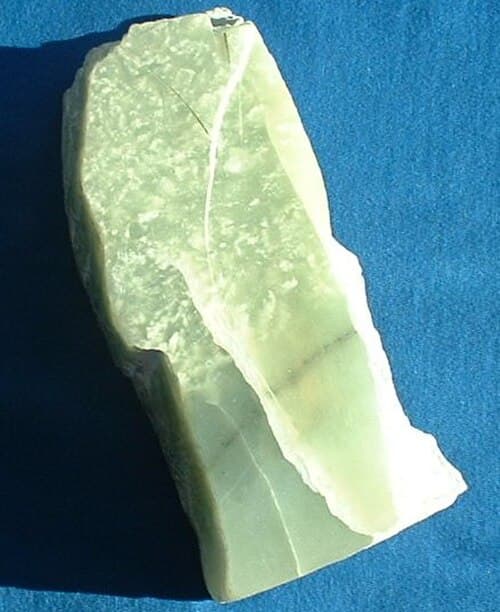
China
Revered for over 7,000 years, jade is the stone of heaven in Chinese culture, believed to protect health, ward off evil, and connect the wearer to divine virtue.

India
The primordial sound of the universe, Om is the most sacred symbol in Hinduism, Buddhism, and Jainism.
Tiny figures made of wire and thread, worry dolls have helped generations of Guatemalan children sleep peacefully. Modern psychology is now confirming what indigenous wisdom has long known about externalising anxiety.
No stone has been more consistently revered for its healing properties across more cultures and millennia than jade. From Neolithic China to pre-Columbian Mesoamerica, trace jade's extraordinary journey as the world's premier healing gem.
Every human culture has developed its own system of healing charms. From Australian Aboriginal spirit stones to Native American medicine pouches, explore the remarkable global tapestry of health-focused talismans.

