

34
Success
🐘
Ganesha Figurine
India
The elephant-headed Hindu deity Ganesha is the remover of obstacles and the lord of new beginnings.
4.9Learn more →

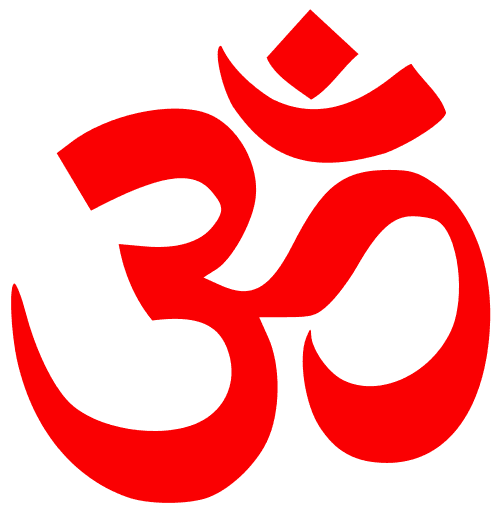
The primordial sound of the universe, Om is the most sacred symbol in Hinduism, Buddhism, and Jainism.
Om (also written Aum) is considered the first sound of creation in Hindu cosmology — the vibration from which the entire universe arose. The symbol itself is a sophisticated visual encoding of three states of consciousness: waking (A), dreaming (U), and deep sleep (M), with the silence after the syllable representing the fourth state of pure awareness. Wearing or displaying Om is not merely decorative; it is believed to attune the wearer to the fundamental frequency of existence itself.
The visual form of the Om symbol carries layers of meaning embedded in every curve. The lower curve represents the waking state, the upper curve the unconscious state, the curve issuing from the middle represents the dream state, and the dot above the crescent signifies the transcendental fourth state — the point from which all else emerges. This layered symbolism makes Om a complete philosophical statement rendered in a single glyph, one that practitioners of yoga and meditation treat as a living map of the mind.
Across daily life in India, Nepal, and the broader Hindu-Buddhist world, Om appears on temple walls, prayer beads, clothing, tattoos, and the opening pages of sacred texts. Chanting Om at the beginning of meditation or prayer is believed to clear the mind of distractions and open a channel to divine consciousness. As a talisman, Om pendants and wall hangings protect the space they occupy by maintaining a vibration of sacred awareness.
The primordial sound of the cosmos, representing universal consciousness, divine protection, and the unity of all existence.
Wear an Om pendant close to the heart for continuous protection and clarity. Hang an Om wall piece at the entrance of a home or meditation space. Chanting the syllable slowly three times before beginning any important task is considered highly auspicious.
The written form of Om that most people recognize today is derived from the Devanagari script. However, in South India the symbol looks quite different, written in Tamil or Telugu script, yet carries identical sacred weight.
Om is a universal spiritual symbol that transcends any single religion, appearing in Hinduism, Buddhism, and Jainism. Practitioners of yoga and meditation worldwide use it respectfully. The key is approaching it with reverence rather than treating it as mere fashion.
The main entrance, the prayer room, or the meditation corner are ideal locations. The symbol should never be placed in bathrooms or on the floor, and ideally it should be at eye level or above.
Gold is most commonly associated with divine light and prosperity. Red Om symbols are used in protective contexts. Silver is associated with clarity and the moon. All colors carry the same fundamental power; the color shifts the specific emphasis.
India
The elephant-headed Hindu deity Ganesha is the remover of obstacles and the lord of new beginnings.

India
Seeds of the Elaeocarpus ganitrus tree, rudraksha beads are the tears of Shiva — the most potent Hindu spiritual talisman.

India
A string of 108 prayer beads used for mantra repetition, mala beads align the practitioner's energy with divine intention through meditative counting.

India
The eight-spoked wheel represents the Buddha's Noble Eightfold Path and the turning of cosmic law, one of the most universal Buddhist symbols.

