
127
General
🪢
Chinese Knot
China
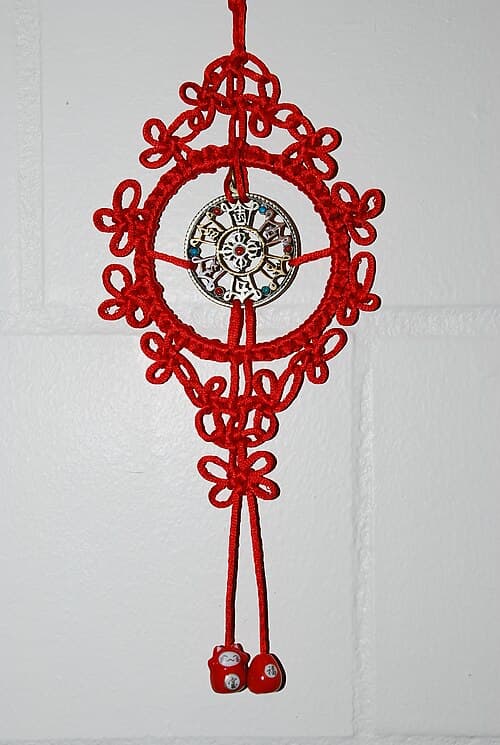
Chinese decorative knots are intricate single-cord creations representing unity, good fortune, and the endless continuity of blessings — each pattern carries its own specific meaning.
4.3Learn more →

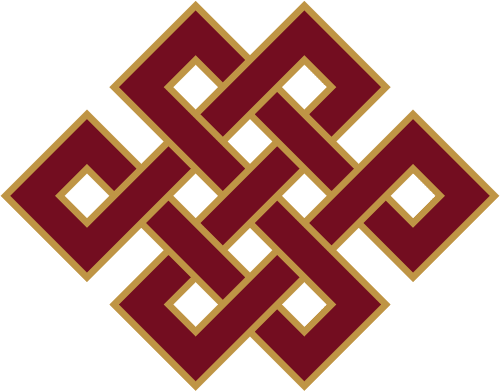
The Mystic Knot (Pan Chang Knot) is feng shui's most powerful good fortune symbol — an endless interlaced pattern representing the infinite flow of luck and the interconnection of all blessings.
The Mystic Knot (Pan Chang Jie, 盤長結), also called the Endless Knot or Eternal Knot in feng shui contexts, is considered one of the most auspicious symbols in the entire Chinese symbolic vocabulary — the direct encoding of 'endless good fortune' in a single visual image. It is one of the Eight Auspicious Symbols of Chinese Buddhism and appears in temple art, ritual objects, imperial decorative schemes, and feng shui practice as a concentrated embodiment of continuous, unbroken blessing.
The Mystic Knot is constructed from a single continuous line that folds back on itself in a precise geometric pattern, creating six infinity symbols (∞) interlocked in a three-by-two arrangement, with no visible beginning or end. This visual structure is the symbol's primary metaphysical statement: all blessings are interconnected, each area of life supporting and generating the others, in an endless loop that has no weak point. Wealth generates health generates happiness generates wisdom generates more wealth — the cycle continues indefinitely without interruption or loss.
In Chinese folk tradition, the number six is the number of smooth flow and the absence of obstacles (liu meaning both 'six' and 'flow' with different characters). The six infinity symbols of the Mystic Knot therefore represent the endless smooth flow of good fortune in all six aspects of life: wealth, health, love, success, protection, and general happiness. As a feng shui enhancer, the Mystic Knot is used in all sectors of the bagua map simultaneously, as its all-encompassing symbolism makes it universally applicable rather than sector-specific.
The endless, interconnected, self-reinforcing cycle of all good fortune in all areas of life simultaneously — the complete blessing expressed in a single image that has no end and no weak point.
Hang a Mystic Knot in red silk in any area of the home to create a general good fortune field. Use as a central pendant on a feng shui wind chime. Incorporate into Chinese knotwork jewelry worn continuously for permanent blessing. Place on the front door, in the wealth corner, or at the work desk. The knot should be made from quality material — silk or jade or metalwork rather than plastic.
The Mystic Knot is the foundation pattern used in Chinese knotting competitions, where master artisans demonstrate their skill by tying the precisely correct 12-fold or 24-fold versions of the Pan Chang using a single cord without any tools — a feat requiring years of practice and the ability to visualize the three-dimensional path of a single thread through dozens of crossings.
The Chinese Knot is a general category covering all Chinese decorative knotwork, of which there are over a hundred distinct patterns. The Mystic Knot (Pan Chang Jie) is the specific pattern most associated with endless good fortune — it is the most symbolically powerful member of the Chinese Knot family, and the term 'Mystic Knot' specifically identifies this one design.
They are the same Buddhist symbol (Shrivatsa or endless knot) expressed through slightly different visual traditions. The Chinese version (Pan Chang) has a characteristic 3x2 grid structure of six infinity loops. The Tibetan/Mongolian version uses a more open, rectangular interlaced structure. Both are from the same Ashtamangala set and carry essentially identical symbolism.
Yes — while the symbol originates in Buddhist iconography, it has been so thoroughly integrated into secular Chinese feng shui and folk luck tradition that it functions equally well as a purely cultural luck symbol. The specific Buddhist metaphysics of interdependence are embedded in the symbol regardless, but engaging with it does not require Buddhist practice.
China
Chinese decorative knots are intricate single-cord creations representing unity, good fortune, and the endless continuity of blessings — each pattern carries its own specific meaning.
Mongolia
The Mongolian Eternal Knot (Ulzii) is one of the eight auspicious symbols of Tibetan Buddhism, representing the endless interdependence of all phenomena and the infinite compassion of the Buddha.

China
The red string bracelet is one of East Asia's most widely worn protective charms, believed to ward off evil, bind fated relationships, and carry the protective power of the color red.

China
Shuang Xi — the Double Happiness character — is China's most recognized symbol of marital joy, formed by writing the character for 'happiness' twice in a single united form.

