
162
General
🪢
Mystic Knot
China
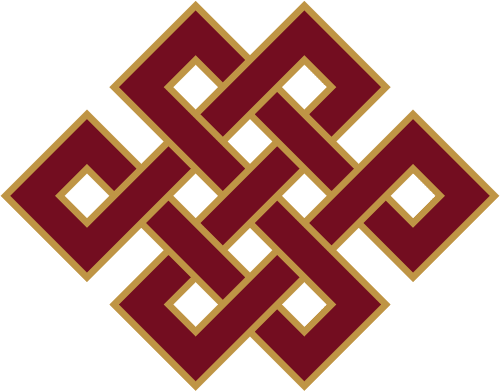
The Mystic Knot (Pan Chang Knot) is feng shui's most powerful good fortune symbol — an endless interlaced pattern representing the infinite flow of luck and the interconnection of all blessings.
4.5Learn more →

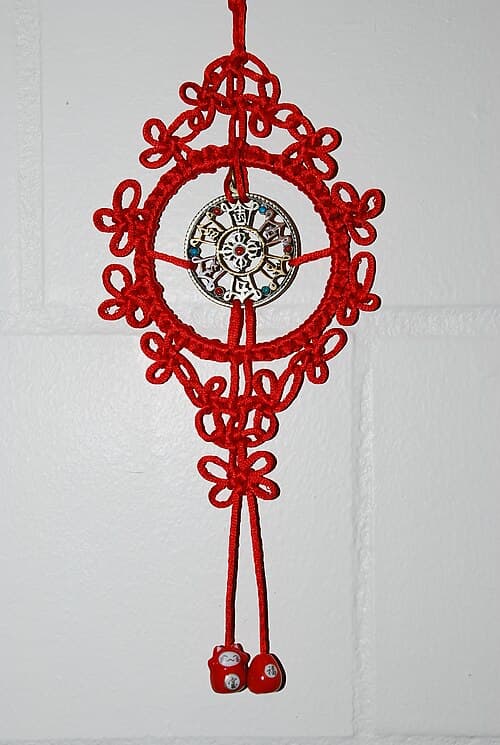
Chinese decorative knots are intricate single-cord creations representing unity, good fortune, and the endless continuity of blessings — each pattern carries its own specific meaning.
Chinese decorative knotting (Zhongguo jie) is a textile art form with roots extending back at least two thousand years, though it reached its peak of sophistication during the Tang and Song dynasties. Unlike Western macramé, which typically uses multiple cords, Chinese decorative knots are created from a single length of cord, manipulated into complex symmetric patterns that represent specific auspicious concepts. The unity of the single cord — beginning and ending nowhere visible, forming an apparently infinite design — is itself the central metaphor: life, good fortune, and love as things with no beginning and no end.
Each knot pattern has a specific name and meaning derived from the visual symbolism of its shape or from the sounds of its name in Mandarin. The Pan Chang knot (endless knot) is the most sacred, representing the infinite compassion of Buddha and the endless cycle of death and rebirth. The Cloverleaf knot represents the four cardinal blessings: prosperity, happiness, longevity, and peace. The double coin knot brings financial luck. The button knot, used as a practical fastener on traditional Chinese garments, is considered protective. The dragonfly knot brings joy. These patterns have been catalogued in over a hundred documented forms.
Red is the most auspicious color for Chinese knots, connecting the craft to the broader symbolism of red as vitality, good fortune, and the repelling of evil. Gold adds wealth energy; purple adds spiritual depth. Chinese knots are used as door hangings, car rearview mirror charms, jewelry components, and gift packaging, making them among the most versatile and everyday expressions of Chinese luck symbolism.
The endless continuity of good fortune, unity without beginning or end, the binding together of love and luck in a form that cannot be broken, and beauty as the visible face of blessing.
Hang a red Chinese knot at the entrance of your home or business for general good fortune. Choose the specific knot pattern based on your intention: endless knot for spiritual protection, double coin for wealth, cloverleaf for comprehensive blessings. In a car, hang a small knot from the rearview mirror. As jewelry, wear a knot pendant for protection and continuous luck.
The Chinese word for knot (jie) is a homophone for the word meaning 'good luck' and 'to tie/connect,' making Chinese knotting a triple pun — an object that is visually beautiful, whose name sounds like luck, and whose single-cord construction literally demonstrates the connecting power it symbolizes.
The Pan Chang (endless knot) is considered the most spiritually powerful as it represents the infinite compassion of the Buddha and has no beginning or end. For wealth specifically, the double coin knot is most targeted. For comprehensive home blessings, the cloverleaf representing the four cardinal blessings is most popular.
Red is most traditional and most auspicious for general luck and protection. Other colors carry their own emphases: gold for wealth, green for health and growth, pink for romance. A plain white knot is associated with mourning and should be avoided as a luck charm.
Yes, and there is a tradition of belief that hand-tied knots carry more personal energy and therefore more personalized luck. Basic patterns like the button knot and simple infinity knot are learnable by beginners. The intention held during the tying process is considered as important as the pattern itself.
China
The Mystic Knot (Pan Chang Knot) is feng shui's most powerful good fortune symbol — an endless interlaced pattern representing the infinite flow of luck and the interconnection of all blessings.
Mongolia
The Mongolian Eternal Knot (Ulzii) is one of the eight auspicious symbols of Tibetan Buddhism, representing the endless interdependence of all phenomena and the infinite compassion of the Buddha.

China
The red string bracelet is one of East Asia's most widely worn protective charms, believed to ward off evil, bind fated relationships, and carry the protective power of the color red.

China
In Chinese culture, the bat is one of the most auspicious animals because its name (fu) is a perfect homophone for 'good fortune' — making the bat a living embodiment of luck itself.

