
85
General
🪔
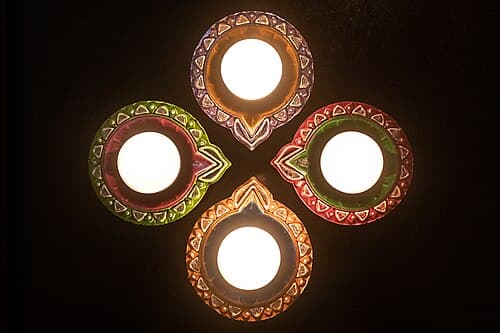
Diya Lamp
India
The clay oil lamp is the most fundamental symbol of the dispelling of darkness and the inviting of divine light into one's life.
4.8Learn more →


Sacred floor art drawn at thresholds and courtyards to welcome Lakshmi and repel negative energies through geometric beauty.
Kolam (in Tamil and South Indian tradition) and Rangoli (in North and West India) are intricate patterns drawn on the floor, particularly at the threshold of homes and in courtyards, using rice flour, colored powders, or flower petals. The tradition is primarily performed by women early in the morning before sunrise, making it a meditative daily practice as well as a spiritual act. The patterns serve as visible invitations for Lakshmi to enter the home and as protective boundary markers that prevent evil spirits from crossing the threshold.
The geometric precision required to create traditional kolam — particularly the chikku (interlocking loop) patterns that form seamlessly connected designs without lifting the drawing tool — develops focused concentration and manual dexterity that practitioners associate with mental discipline and meditative calm. Traditional kolam artists speak of the practice as a form of moving meditation, where the mind becomes still in the process of executing complex, repetitive geometry. This daily meditative aspect of kolam has made it a profound women's spiritual practice that requires no temple, no priest, and no special materials — only rice flour and focused attention.
Ecologically, the use of rice flour for kolam was deliberately chosen: it provides food for ants and small insects, making the art an act of compassion and generosity toward the smallest beings. The practice of feeding insects and small creatures before eating oneself is embedded in Hindu ethics as an expression of interconnectedness. Modern kolam artists work in an extraordinary range of styles from mathematically complex chikku patterns to elaborate peacock and flower designs, and the tradition has been recognized by UNESCO for its living cultural significance.
Welcome for Lakshmi and prosperity, protective threshold marking, the spiritual merit of generosity (feeding small creatures), and a daily practice of focused beauty.
Draw kolam at your main entrance every morning using rice flour or colored powder. Begin after a brief morning prayer of intention. For specific intentions: lotus kolam for spiritual growth, lamp kolam for Lakshmi's blessing, elephant kolam for abundance. During Diwali, make elaborate kolam with multiple colors and light diyas around them.
The mathematical structures underlying traditional kolam patterns have been studied by ethnomathematicians and computer scientists. The chikku kolam designs are topologically equivalent to certain classes of graph theory problems, suggesting that traditional kolam artists independently discovered mathematical principles that Western mathematics formalized only in the 20th century.
Traditionally kolam is primarily a women's practice in South India, passed from mothers to daughters. However, there are no explicit prohibitions against men drawing kolam, and in some ceremonial contexts men do participate. In the broader Rangoli tradition of North India, all family members often contribute.
A washed-away kolam is not considered inauspicious — in fact, it is considered auspicious when rain cleanses the pattern, as rain itself is a blessing. The impermanence of kolam is part of its beauty: it is recreated fresh each day, reinforcing the lesson that beauty is in the practice, not the product.
Yes. Pulli kolam (dot-based patterns) are used for daily practice. During Pongal (harvest festival), special Pongal kolam with sun, sugarcane, and cow motifs are drawn. At weddings, lotus and peacock patterns predominate. During Navarathri, nine different kolam patterns are created over the nine nights.
India
The clay oil lamp is the most fundamental symbol of the dispelling of darkness and the inviting of divine light into one's life.

India
The sacred red mark applied to the forehead activates the ajna chakra and marks the body as consecrated to the divine.

India
Strung across doorways during festivals and ceremonies, mango leaves welcome prosperity and protect against negative energy.
India
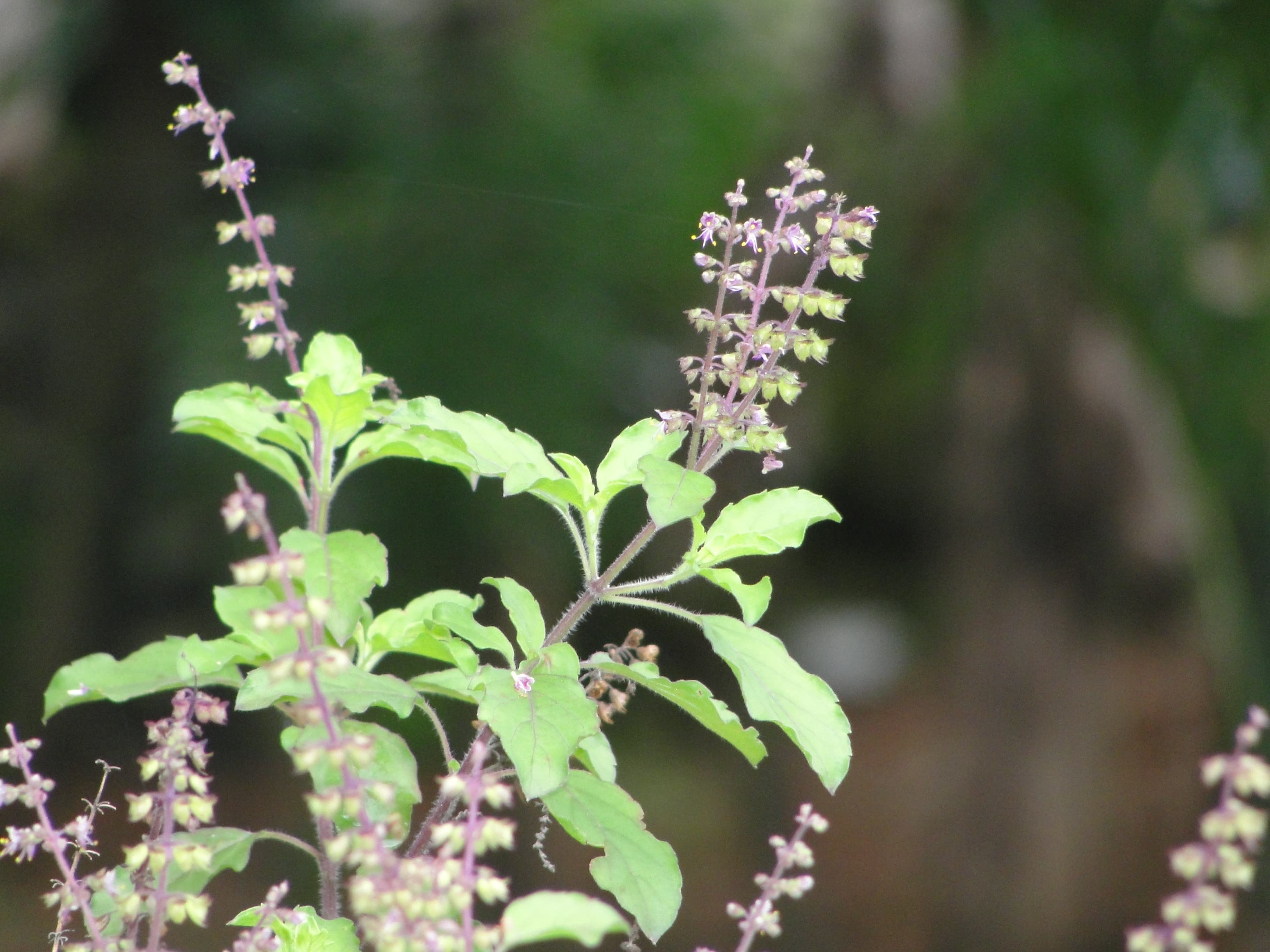
The holy basil plant is considered the earthly manifestation of the goddess Lakshmi and the most sacred plant in the Hindu home.

