
239
Protection
🔑
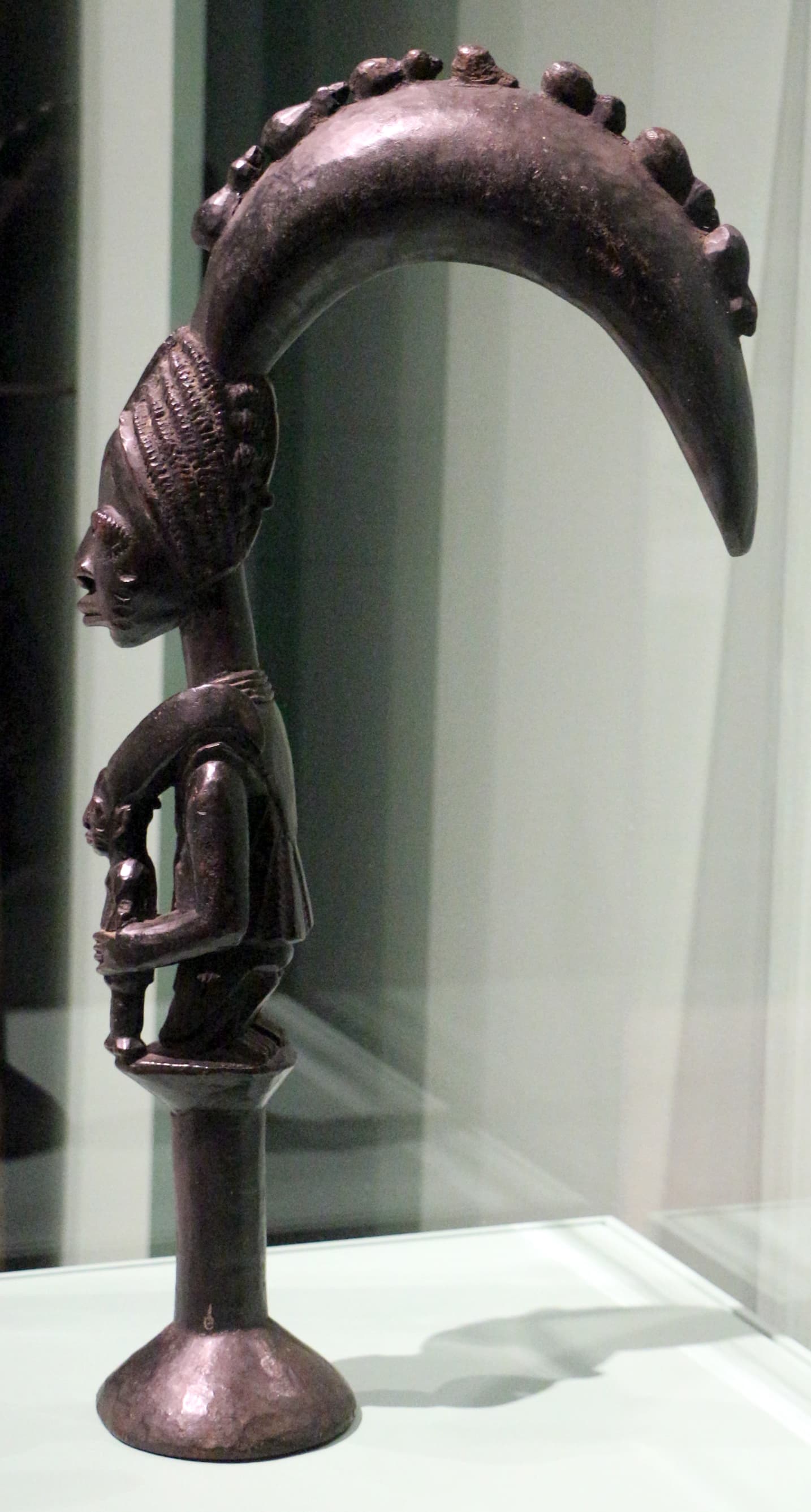
Cuban Elegua
Cuba (Santería / Lucumí / Candomblé tradition, from Yoruba origin)
The Orisha of crossroads, doors, and beginnings in Cuban Santería — the trickster guardian who must be honored first in all ceremonies.
4.8Learn more →

Sacred geometric symbols drawn in cornmeal or flour to invoke specific Lwa (spirits) in Haitian Vodou ceremonies.
Veves are the sacred ritual drawings of Haitian Vodou — complex geometric symbols drawn on the ground or altar with cornmeal, flour, or other powders to summon and seat specific Lwa (divine spirits/angels) during ceremonies. Each Lwa has their own specific veve, as distinctive and precise as a signature, and drawing the veve with skill and accuracy is understood as both an invitation and a physical representation of the Lwa's energy made manifest on the earth. The veve creates a sacred landing space for the Lwa's descending presence.
Veves are among the most visually striking of all Afro-diaspora sacred art forms — intricate, symmetrical, and powerfully geometric, they combine African cosmological concepts with Haitian artistic innovation to create symbols of extraordinary beauty. The veve of Baron Samedi, Lwa of the dead, features skulls and coffins. Erzulie Freda's veve shows a heart pierced by a sword surrounded by flowers — an image of both love's beauty and its pain. Ogou's veve shows weapons and fire. Papa Legba's veve, the guardian of crossroads, shows a staff and keys.
As visual luck charms and decorative objects, veve imagery has spread beyond Vodou practice into Haitian visual art, tattoo culture, and international appreciation of Haitian creative genius. Wearing or displaying a veve without Vodou initiation is a matter for personal discernment, but approaching the imagery with knowledge of its meaning and respect for its origins is considered appropriate appreciation of one of the Caribbean's most sophisticated spiritual art forms.
The veve represents the signature of divine force made visible in the human world, the moment at which invisible spiritual reality takes geometric form that human eyes can recognize and engage with. Each veve embodies the specific energy, personality, and power of its Lwa, serving simultaneously as invocation, representation, and sacred space creation.
If you are working with Haitian Vodou under the guidance of a houngan or mambo (priest), use veves as instructed in ceremony. For those working with Haitian-inspired spiritual arts more broadly, study the meaning of specific veves and choose one that corresponds to an area of your life needing divine attention. Display or draw the veve with understanding of its specific Lwa's energy and attributes.
The Haitian Vodou flag tradition (drapo Vodou) developed as a way to carry veve imagery in ceremony — elaborate flags decorated with sequins and beads depicting veve symbols are carried in procession and used as sacred objects that invoke the Lwa's presence. Haitian drapo Vodou are now recognized internationally as extraordinary works of textile art, displayed in major museums worldwide.
This is an area of active cultural discussion. Many Haitian Vodou practitioners ask that non-initiates not tattoo veve symbols, as wearing a Lwa's signature permanently on your body without being properly introduced to that Lwa in ceremony can be spiritually problematic. Those drawn to this imagery are encouraged to learn about Haitian Vodou properly and consider formal initiation if they wish to work seriously with these forces.
Haitian Vodou is a complex, sophisticated African diaspora religion with roots in Fon, Ewe, and Yoruba West African traditions. 'Voodoo' is a Hollywood-created stereotype associated with zombies, pins in dolls, and evil magic — none of which accurately represent Vodou practice. The harmful stereotype was created specifically to demonize Haitian culture after Haiti's successful slave revolution in 1804, the first and only successful slave revolt in history.
Major Lwa include: Papa Legba (crossroads, communication — must be honored first); Baron Samedi (death, resurrection, humor); Erzulie Freda (love, beauty, luxury); Ogou (iron, warfare, justice); Ayizan (healing, commerce, markets); Agwe (ocean, sailors); La Sirene (ocean, dreams, music). Each Lwa has distinct personality, offerings, colors, and sphere of influence.
Cuba (Santería / Lucumí / Candomblé tradition, from Yoruba origin)
The Orisha of crossroads, doors, and beginnings in Cuban Santería — the trickster guardian who must be honored first in all ceremonies.

Brazil (from Yoruba tradition)
Sacred beaded necklaces (elekes) specific to each Orixá deity in the Afro-Brazilian Candomblé tradition, worn by initiates as signs of divine protection.

Jamaica
Jamaica's national bird — the streamertail hummingbird — a symbol of joy, agility, and the vibrant natural spirit of the Caribbean island.

