
311
Success
🗡️
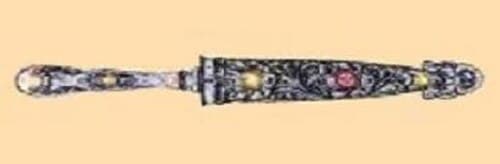
Argentinian Gaucho Knife
Argentina (Pampas region)
The iconic facón of the Argentine gaucho — a large sheath knife symbolizing autonomy, courage, and the free life of the Pampas horseman.
4.4Learn more →


Chile's national flower — a rare hanging bell-shaped blossom of the Andes forests associated with love, Chilean identity, and the wild beauty of the southern Pacific coast.
The copihue (Lapageria rosea) is one of the most beautiful and culturally significant flowers in South America — Chile's national flower, a climbing vine that produces stunning waxy, bell-shaped flowers in deep crimson or white, hanging like jewels from the dense temperate forests of southern Chile and the Andean foothills. Named for the Mapuche word 'copiwe,' the flower grows in the cool, humid environments of south-central Chile from the Bio-Bío region southward, blooming through summer and autumn in its native habitat.
In Mapuche tradition, the copihue is associated with love, beauty, and the protection of the forest. The Mapuche people — who maintained their independence against Inca and Spanish conquest longer than almost any other South American people — saw the copihue as a symbol of resilience, of beautiful things that endure despite adversity. The flower's waxy petals are virtually indestructible compared to most flowers, maintaining their form long after being cut, a quality that made them powerful metaphors for enduring love.
When Chile chose a national flower in 1977, the copihue was the unanimous choice — it is found nowhere else on earth in its natural form and perfectly represents Chilean uniqueness. Copihue charms — ceramic, silver, or glass flowers in the characteristic bell shape and crimson color — are popular Chilean gifts given for love, for homecoming, and for anyone who needs the reminder that rare beauty can endure even in difficult conditions.
The copihue represents rare beauty, enduring love, and the Chilean spirit of resistance and resilience. Its exclusive origin in Chilean Andean forests makes it a perfect symbol of national identity and the idea that some beautiful things exist only in one place in the entire world — and must be cherished and protected precisely because of their rarity. It brings the energy of love that endures and beauty that survives adversity.
Give copihue jewelry or ceramics as gifts of love and homecoming — they are the perfect present for someone who is far from Chile or who needs the reminder of what they have to return to. Wear copihue earrings or a pendant when you need to affirm your personal beauty and uniqueness. Display a copihue image in your home to invite enduring love and the recognition of rare gifts in your life.
The copihue vine can live for decades and grow up to ten meters long, entwining itself through the forest canopy in its native southern Chile. Unlike most flowering plants that can be successfully cultivated far from their native environment, the copihue is notoriously difficult to grow outside its specific habitat requirements, reinforcing its status as a symbol of unique place-belonging.
The copihue (Lapageria rosea) is occasionally grown by specialist nurseries outside Chile, particularly in the Pacific Northwest of the US and Canada, the UK, and New Zealand, where cool, humid climates approximate its native conditions. However, it remains notoriously difficult to cultivate and rarely blooms as prolifically as in its native Chilean habitat.
The red copihue is the classic and most widely recognized variety, associated with passion, love, and the characteristic Chilean landscape color palette. White copihues are rarer and are associated with purity, peace, and new beginnings. In Mapuche tradition, white copihues have additional ceremonial significance as sacred flowers used in healing and purification rituals.
The berries of the copihue plant, which follow the flowers, are indeed edible and were traditionally eaten by Mapuche communities. They are slightly sweet and starchy. The flowers themselves are not typically eaten, though they are used in herbal medicine in some traditions. However, habitat loss has made wild copihue increasingly rare, so foraging should be avoided in protected areas.
Argentina (Pampas region)
The iconic facón of the Argentine gaucho — a large sheath knife symbolizing autonomy, courage, and the free life of the Pampas horseman.

Colombia (Muisca and other pre-Columbian civilizations)
The sacred gold-copper alloy of Colombia's pre-Columbian peoples — the metal behind the El Dorado legend and some of the most extraordinary goldwork in world history.

Peru (Andean civilizations)
The stepped cross of the Andes representing the cosmic order of Andean cosmology — the three worlds of the Pachamama universe.

