

6
Protection
🕸️
Dreamcatcher
Ojibwe Nation, North America
A woven hoop hung above the bed to filter nightmares and allow only good dreams to pass through.
4.8Learn more →

The dreamcatcher is one of the most widely sold Native American-inspired objects in the world. But its true origins, meanings, and proper use are far richer and more specific than most people know.
Walk into any home decor shop, festival market, or online marketplace and you will encounter dreamcatchers. Hanging in windows, dangling from rearview mirrors, printed on phone cases and tapestries — the dreamcatcher has become one of the most globally distributed decorative and spiritual objects of the past half century. Yet most people who own one know little about where it comes from, what it actually means, or how it was originally intended to be used.
The dreamcatcher's true story is more specific, more beautiful, and more culturally grounded than its current commercial ubiquity suggests.
The dreamcatcher originates with the Ojibwe people (also known as the Chippewa or Anishinaabe), one of the largest Indigenous nations in North America, whose traditional homeland spans the Great Lakes region of what is now the United States and Canada.
In Ojibwe, the dreamcatcher is called asabikeshiinh (the independent animate word for spider) or bawaajige nagwaagan ("dream snare"). Its creation is associated with the figure of Asibikaashi — Spider Woman — a protective spiritual figure in Ojibwe cosmology.
According to the most widely told Ojibwe origin legend, in the time before time, Spider Woman (Asibikaashi) was the protector of all people, particularly children. She wove her web each morning around the camp, catching the first rays of sunlight and using them to protect the sleeping people through the day.
As the Ojibwe people spread across great distances and it became impossible for Spider Woman to weave her protective web over all of them, the mothers and grandmothers of the people began making web-shaped charms from willow hoops and sinew to replicate her protection. These were hung over the sleeping places of children to catch bad dreams and allow only good dreams to pass through to the sleeper.
The traditional Ojibwe dreamcatcher is a small hoop (traditionally willow) strung with a web of sinew or natural plant fibre in a specific pattern with a small hole in the centre. Feathers hang from the hoop, often along with beads and other ornaments.
The protective mechanism is specific:
The feathers serve an additional function: they are said to carry the good dreams gently, breathing life into them as they reach the sleeper. Eagle feathers (used in men's dreamcatchers) and owl feathers (used in women's) carry specific spiritual authority in Ojibwe tradition.
The hole at the centre is critical — without it, no dreams can pass through. A dream catcher with no hole would prevent all dreams, good and bad, from reaching the sleeper.
Traditional Ojibwe dreamcatchers share several characteristics that distinguish them from mass-produced replicas:
Size: The original dreamcatchers made for children were small — roughly the size of a child's hand — intended to be placed close to the sleeping child's head, within the web's range of action.
Materials: Willow hoop (flexible and fragrant), sinew or natural plant fibre for the web, genuine bird feathers (though in modern practice, ethical concerns about certain species have led to the use of feathers from non-protected birds), natural beads (often turquoise, bone, or shell).
Asymmetry: The web is woven in a specific asymmetric pattern — not a perfect geometric spider web, but an organic, irregular pattern that reflects the authentic process of weaving rather than mechanical production.
Intention: Perhaps most importantly, traditional dreamcatchers were made with specific protective prayer and intention woven into them by the maker. The act of making was itself a spiritual practice.
The dreamcatcher has spread beyond its Ojibwe origins in two distinct ways:
Pan-Indian adoption: During the 1960s–70s American Indian Movement (AIM), which brought together Indigenous people from many nations in political solidarity, the dreamcatcher spread from its Ojibwe origins to be adopted by many other First Nations peoples as a general symbol of Indigenous spirituality and solidarity. This intra-Indigenous spread is considered by most within those communities to be legitimate cultural sharing.
Global commercialisation: The dreamcatcher's spread into non-Indigenous popular culture — where it is mass-produced in plastic and synthetic materials, often with no connection to its spiritual meaning — is far more contested. Many Ojibwe and other First Nations people view the mass commercial dreamcatcher market as cultural appropriation that trivialises a sacred object and generates profit for non-Indigenous businesses at the expense of Indigenous communities.
If you are drawn to dreamcatchers as protective charms, these guidelines reflect both cultural respect and practical effectiveness:
Source ethically: Purchase from Indigenous artisans — specifically Ojibwe makers if possible — whose work is made with authentic materials and traditional methods. Organisations like the Indian Arts and Crafts Association can help identify authentic sources.
Use appropriately: A dreamcatcher belongs over a sleeping place — a bed, a crib, a couch where you nap. It is not a general home decoration or car ornament in its traditional function.
Replace when needed: Traditional Ojibwe practice holds that a dreamcatcher should be replaced periodically, particularly when it begins to look worn or dusty — a sign that it has captured much and needs refreshing. The old dreamcatcher is typically burned.
Learn before you display: Understanding the Ojibwe origin, the legend of Spider Woman, and the specific mechanism of action makes engaging with a dreamcatcher a culturally respectful and personally meaningful practice rather than mere decoration.
Beyond the specific Ojibwe tradition, the dreamcatcher speaks to a universal human experience: the vulnerability of sleep. Every culture that has ever existed has had to reckon with the fact that sleep makes us passive, unguarded, and subject to the images that arise unbidden in the dream state. The nighttime world — from nightmares to sleep paralysis to anxiety dreams — has always required protection.
The dreamcatcher offers that protection through one of the most beautiful mechanisms in the world of lucky charms: the web that catches harm, the feather that carries goodness, the small hole through which only what serves us can pass. Whether understood literally or metaphorically, this is a genuinely wise model for navigating the world's mixed stream of experience.
Ojibwe Nation, North America
A woven hoop hung above the bed to filter nightmares and allow only good dreams to pass through.
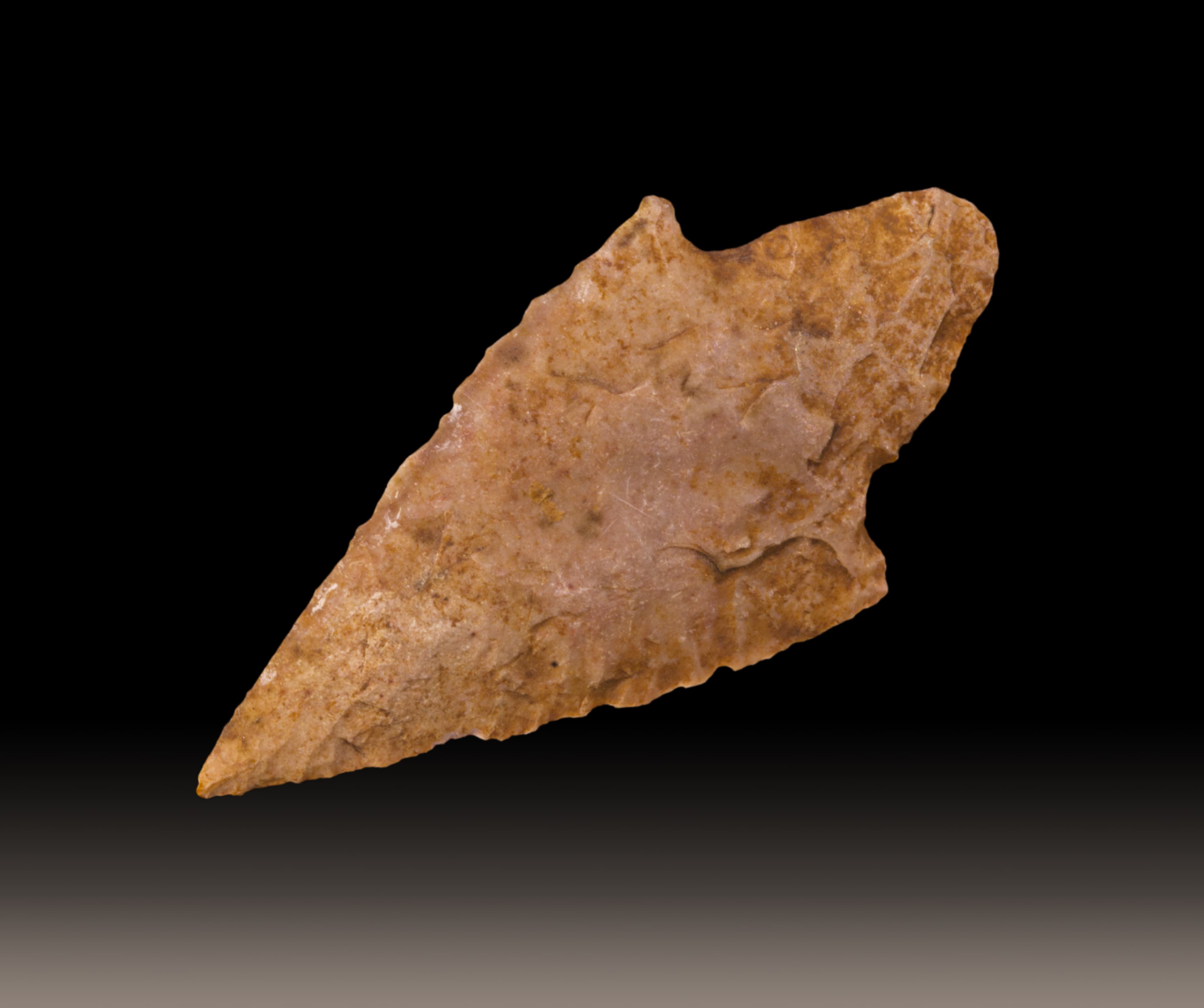
Pan-Indigenous North America
Ancient stone points worn as amulets to deflect evil spirits and negative energy, honoring the skills of ancestral hunters.
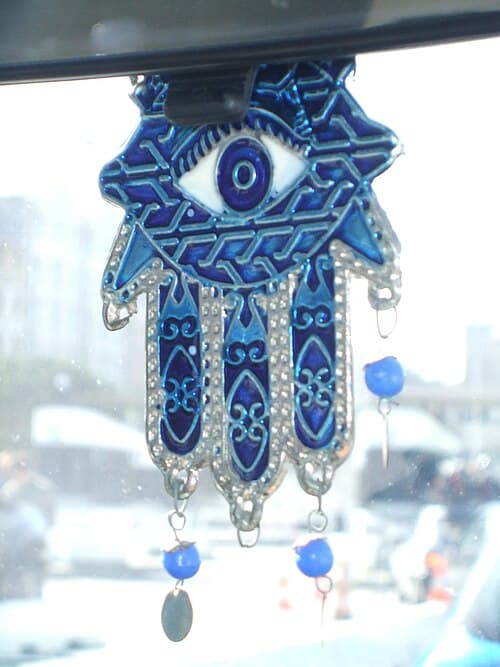
Middle East
An open palm amulet warding off the evil eye across Middle Eastern and North African cultures.

India
The primordial sound of the universe, Om is the most sacred symbol in Hinduism, Buddhism, and Jainism.
A protection charm bundle — sometimes called a mojo bag, medicine pouch, or gris-gris — is one of the most personal and powerful protective tools you can create. Here is how to make one that works.
The hamsa is one of the world's oldest protective symbols, revered across three Abrahamic religions and pre-dating all three. Discover the rich history and cross-cultural significance of the hand that protects.
From ancient Mesopotamia to modern Instagram aesthetics, the evil eye — and the charms made to ward it off — may be the single most widespread protective talisman in human history. Discover why.

