

2
General
🍀
Four-Leaf Clover
Ireland
The rarest clover mutation, treasured as nature's own lucky charm.
4.9Learn more →

Europe - Eastern
8 charms from this country
Bosnia's extraordinary religious diversity — Muslim (Bosniak), Orthodox Christian (Serb), and Catholic (Croat) communities living in proximity — produces a layered charm culture where Islamic, Orthodox, and Catholic protective objects coexist. The hamsa and evil eye beads appear in Bosniak households, while Orthodox Serbs use crosses and rosary beads, and Catholics carry saints' medals. The evil eye (urok) is feared across all three communities.
The Bosnian traditional embroidery (vez) incorporates geometric protective motifs in the form of specific patterns in red and gold thread. The horseshoe, four-leaf clover, and ladybug are universally recognized. The ancient Bosnian tombstones (stećci) from the medieval period, with their distinctive carved symbols of the sun, crescent moon, and hand, reflect a deeper layer of Bosnian spiritual identity.
Ireland
The rarest clover mutation, treasured as nature's own lucky charm.
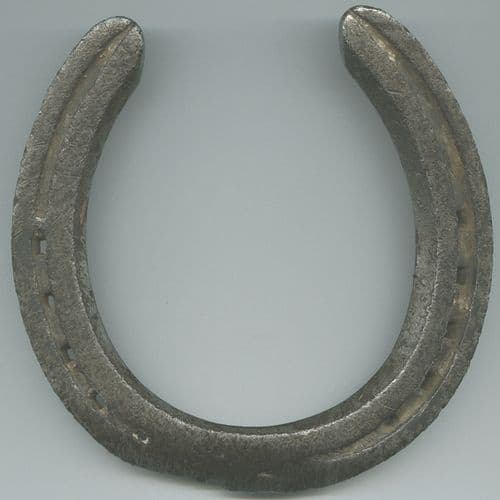
United Kingdom
An iron crescent hung above doorways to catch and hold good luck.
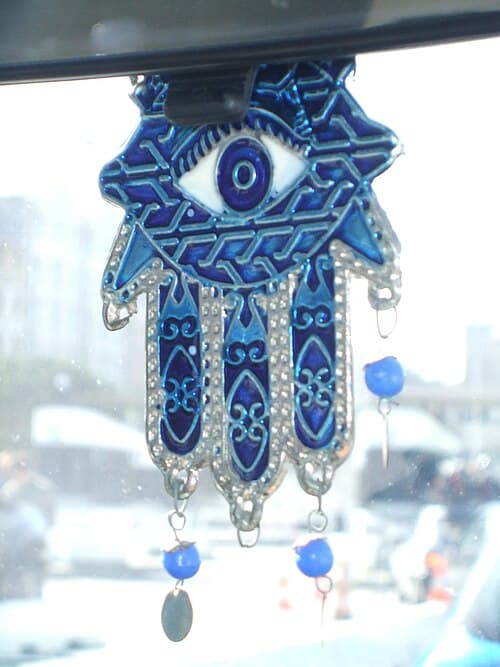
Middle East
An open palm amulet warding off the evil eye across Middle Eastern and North African cultures.

United Kingdom
The spotted red beetle that brings good fortune to whoever it lands upon.

United Kingdom
The humble copper coin that promises a turn of fortune when found heads-up.

Early Christianity (Rome)
The Crucifix — a cross bearing the corpus (body) of Christ — is the central symbol of Christianity and one of the most powerful protective charms in the Western world.
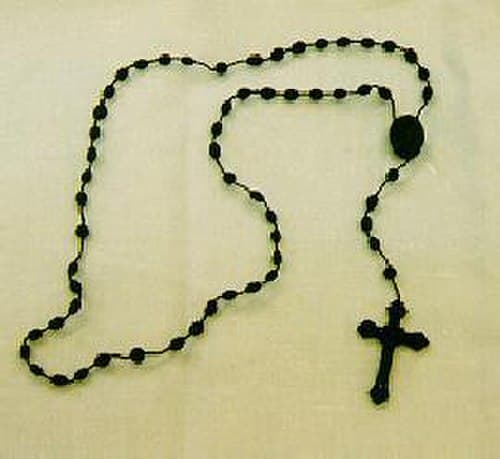
Medieval Europe
Rosary beads are the most recognizable Catholic prayer tool in the world, used by hundreds of millions for meditative prayer, protection, and the invocation of divine grace.

United Kingdom
The most universally lucky number in Western culture, encoded in the cosmos itself.

