

251
Protection
🦅
Senufo Bird (Ivory Coast)
Ivory Coast
The hornbill-based sacred bird figure of the Senufo people — symbol of the first living being and the power of Poro initiation.
4.6Learn more →


The African Fish Eagle of Zambia — supreme symbol of freedom, clear vision, and leadership above the ordinary.
The African Fish Eagle (Haliaeetus vocifer) is one of Africa's most iconic birds — a large, powerful raptor with a distinctive white head and chest, chestnut wings, and a haunting, far-carrying call that has been called the 'sound of Africa.' It appears on Zambia's coat of arms and serves as the country's national bird, but its symbolic reach extends throughout the Great Lakes region, where it also appears in the national symbols of Zimbabwe, Namibia, and South Sudan. The eagle's relationship with water — it hunts fish and tends to nest near large lakes and rivers — makes it a natural symbol for Zambia, a country of magnificent rivers and lakes.
The African Fish Eagle's call is one of the most evocative sounds on the continent: a loud, clear, descending cry that carries for kilometers and is associated with wilderness, freedom, and the vast open spaces of the African lake region. In traditional symbolic systems across the Great Lakes region, the eagle's ability to soar above ordinary terrain and see with extraordinary clarity represents the elevated perspective of great leaders and wise spiritual practitioners. The eagle does not participate in the scramble of creatures on the ground — it operates from a higher vantage point where clarity of vision is possible.
As a lucky charm, the eagle is particularly associated with success in leadership, legal and judicial matters (where clear, impartial vision is essential), and any endeavor requiring perspective beyond immediate circumstances. The fish eagle's combination of aerial perspective, connection to water's abundance, and powerful decisive strike when it sees its target below represents a complete model of effective action: survey broadly, identify the opportunity precisely, then move with speed and certainty.
Elevated perspective above ordinary conflicts, leadership through clear vision, the power of decisive action once an opportunity is identified, freedom from limiting circumstances, and the call of the wild that reminds humans of what is real.
Display Zambian eagle imagery or sculptures in a home office or workspace to invoke the eagle's perspective: step back, look broadly, identify clearly, act decisively. Use an eagle charm when facing decisions that require seeing past immediate pressures to longer-term realities. The eagle call (available as a recording) can be used in meditation to invoke clarity.
The African Fish Eagle was chosen for Zambia's coat of arms partly because of its appearance on the original Victoria Falls Hotel letterhead — a connection to the country's most famous natural landmark, Victoria Falls (Mosi-oa-Tunya, 'The Smoke That Thunders'). The eagle on the Zambian coat of arms holds a fish in one talon — an explicit reference to the country's abundant water resources and fishing tradition.
The fish eagle's call — a loud, clear 'weee-ah, hyo-hyo-hyo' — is produced while throwing the head backward, giving it a particularly open, carrying quality. The call travels across water remarkably well. For people who have heard it in the wild, the call is permanently associated with Africa's open spaces and evokes a visceral sense of wildness and freedom.
Lake Kariba, the Luangwa River, the Kafue River, and the shores of Lake Tanganyika all host large populations of African Fish Eagles. South Luangwa National Park and Lower Zambezi National Park are particularly well-known for eagle sightings. The birds are easiest to spot from boats on the water, where they are most visible hunting.
Yes — fish constitute the vast majority of its diet, though it will opportunistically take other prey including small mammals, birds, and carrion. It hunts by soaring over water, spotting fish near the surface, then diving to snatch them with its specially rough-soled talons that prevent slippery prey from escaping. It can carry fish weighing up to several kilograms.
Ivory Coast
The hornbill-based sacred bird figure of the Senufo people — symbol of the first living being and the power of Poro initiation.

Botswana
The zebra — Botswana's national animal — representing balance, individuality within community, and the beauty of the African savanna.
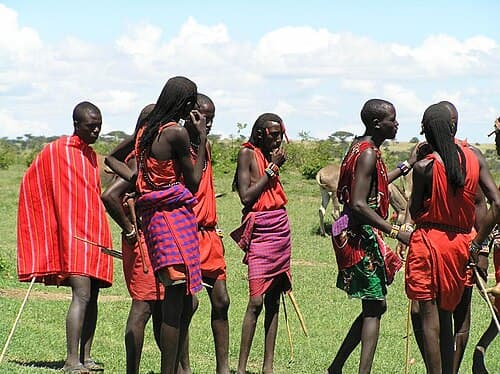
Kenya
Distinctive painted Maasai warrior shield that protects against physical and spiritual harm.

