

435
Success
🔵
Lapis Lazuli
Afghanistan
The royal blue stone of wisdom and truth, carried as a charm of intellectual power, inner vision, and the authority of those who speak truth to power.
4.8Learn more →


The ancient sky-stone of the world's oldest cultures, worn as a charm of protection, communication, and the sacred turquoise bridge between earth and heaven.
Turquoise is one of the oldest gemstones used by humans — Egyptian pharaohs wore it 5,000 years ago, the mines of the Sinai Peninsula and Iran's Khorasan province have been worked for 6,000 years, and the stone appears in the treasuries of every major ancient civilisation from Mesopotamia to Mesoamerica. Its distinctive blue-green colour — caused by copper and aluminium in the mineral structure — has no exact parallel in any other stone, occupying the precise visual midpoint between sky and sea, between heaven and earth.
Native American peoples of the Southwest — Navajo, Hopi, Zuni, and Pueblo communities — have worked turquoise for over a thousand years, considering it the stone that connects the living to the sky and to their ancestors. The Navajo term 'doo'izhii' encompasses turquoise as a fundamental element of life alongside white shell, abalone, and jet. Persian turquoise (the finest in the world, from the Nishapur mines) was called 'piruze' meaning 'victory,' and was set in everything from swords to thrones to ensure success in battle and governance.
Across these cultures, turquoise consistently carries three meanings: protection (particularly during travel), clear and truthful communication, and the bridge between physical and spiritual reality. It is the throat chakra stone par excellence, supporting honest, effective, and inspired communication. It is also one of the most powerful protective travel amulets in any tradition, worn by riders, sailors, and travellers across millennia.
Protection during travel, truthful and effective communication, the sacred connection between earth and sky, and the victory that comes from authentic expression.
Wear at the throat as a necklace for communication enhancement. Give to travellers as a protective amulet. Place on an altar or sacred space as a bridge between the material and spiritual dimensions of your practice. Carry during difficult conversations where honest expression matters.
Natural turquoise is so rare today that most commercially sold 'turquoise' is actually stabilised turquoise (real turquoise hardened with resin), simulated turquoise (howlite or magnesite dyed blue-green), or plastic. Natural, untreated gem-quality Persian turquoise can sell for more per carat than fine sapphire.
Natural turquoise feels warm and slightly waxy to the touch, has slight colour variations and natural matrix patterns, and is relatively soft (Mohs 5-6). If you touch it with a hot pin, natural turquoise smells like burning clay; plastic emits a chemical smell. Reputable gemologists can test it definitively.
Natural turquoise is porous and can change colour over years due to body oils, cosmetics, and light exposure. This is considered by many traditions to be a sign the stone is 'working' and absorbing energy on your behalf. Avoid chemicals and perfumes.
It is the traditional birthstone for December, making it particularly auspicious for people born in that month. However, its protective and communicative qualities make it beneficial for anyone regardless of birth month.
Afghanistan
The royal blue stone of wisdom and truth, carried as a charm of intellectual power, inner vision, and the authority of those who speak truth to power.
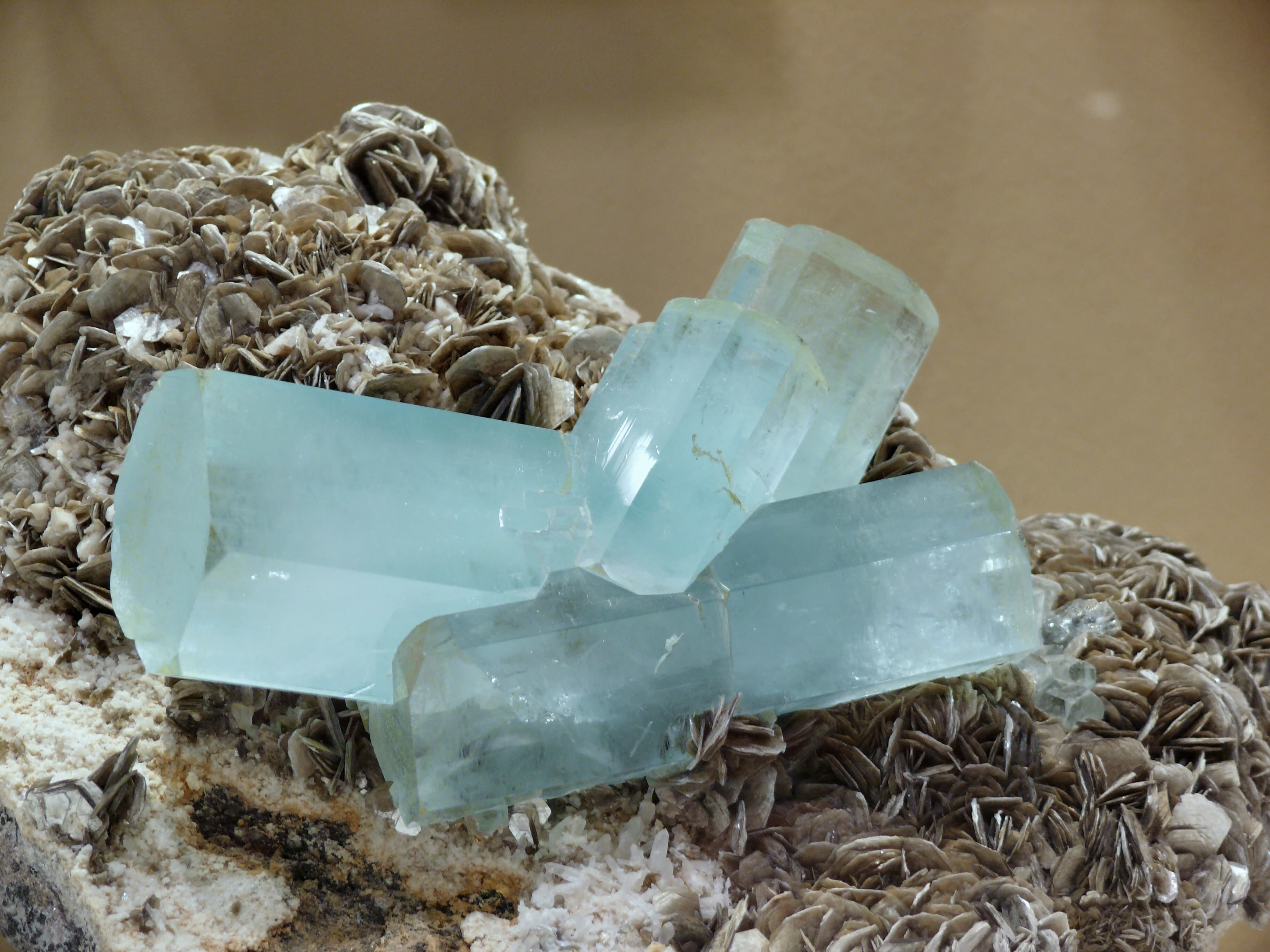
Brazil
The serene blue-green beryl of the sea, carried as a charm for clear communication, emotional calm, courageous truth, and safe passage through any life crossing.

Canada
The deep blue stone of rational mind and inner truth, carried as a charm for clear thinking, honest self-examination, and the calm authority of one who trusts their own perception.

