

266
Love
📿
Zulu Love Letter Beadwork
South Africa
Beaded communication from Zulu culture where colors and patterns encode messages of love and longing.
4.7Learn more →


Fertility doll adorned with colorful geometric Ndebele beadwork, used in coming-of-age and marriage ceremonies.
The Ndebele people of South Africa and Zimbabwe are world-renowned for their vibrant, geometric art — brilliantly painted house murals and elaborately beaded garments that constitute one of Africa's most distinctive visual traditions. Among their most spiritually significant objects are beaded dolls, used primarily in female coming-of-age rituals and given to young women as they transition from girlhood to womanhood. These dolls serve as fertility charms and as tangible expressions of Ndebele cultural identity, adorned with the geometric patterns that identify a woman's social status, marital eligibility, and regional affiliation.
Ndebele beaded dolls typically feature simplified human forms covered almost entirely in the colorful, geometric beadwork that makes Ndebele art so recognizable: bold rectangles, triangles, and stripes in yellow, red, blue, green, and white. The neck and limbs are often extended with beaded rings or elaborate collar structures that mirror the brass neck rings worn by Ndebele women of high status. Far from being toys, these figures embody the accumulated wisdom of Ndebele womanhood and carry prayers for the fertility, marriage prospects, and wellbeing of the recipient.
Today, Ndebele dolls are crafted both for ceremonial use and as collectible art objects, with master craftswomen from Mpumalanga and Limpopo provinces producing pieces of remarkable quality. As lucky charms, they are particularly sought by women hoping for children, those about to marry, and anyone seeking to honor the creative and nurturing aspects of feminine energy. Their joyful colors are also believed to attract positive energy and bring vibrancy into any space.
Feminine fertility, coming-of-age transition, marital blessing, cultural pride, and the power of creative expression as a form of prayer and identity.
Place a Ndebele doll in the bedroom or in a home altar dedicated to fertility and feminine wellbeing. Gift one to a bride-to-be or a woman entering a new life phase. Display in a home to invite vibrant, positive energy and honor African artistic traditions.
Ndebele women traditionally painted their houses with murals as a way to communicate with their community — depicting personal milestones, family achievements, and even political statements. After South Africa's apartheid government forcibly removed Ndebele communities from their land in the 1950s, Ndebele women redoubled their artistic traditions as an act of cultural resistance and identity preservation.
Yes — while they are ceremonial objects with serious cultural meaning, their association with protection, fertility, and female wisdom makes them entirely appropriate in a child's space, particularly for girls. The bright colors are also believed to encourage creativity and joy.
Each pattern carries encoded information: a woman's marital status, age group, regional origin, and social standing. The colors correspond to specific meanings in Ndebele color symbolism. The geometric forms themselves reflect a sophisticated visual language that predates European contact.
The most authentic pieces come directly from Ndebele communities in Mpumalanga and Limpopo provinces in South Africa. Fair-trade craft organizations like South African Handmade Collective and reputable galleries in Johannesburg are reliable sources for verified authentic work.
South Africa
Beaded communication from Zulu culture where colors and patterns encode messages of love and longing.

South Africa
Xhosa beadwork encoding clan identity and life stage — worn at key transitions and milestones.
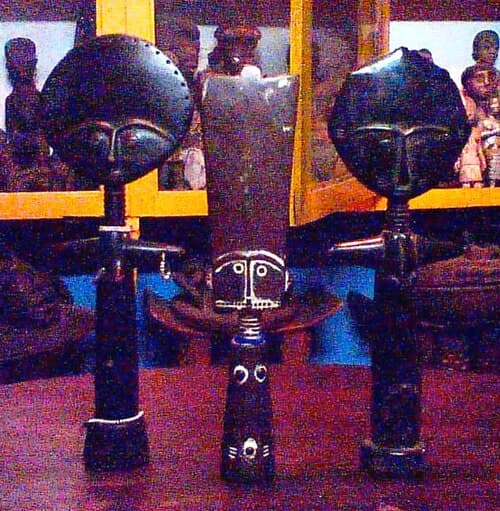
Ghana
The iconic Akan wooden fertility doll — carried by women hoping for children and by pregnant women blessing their unborn.

