

63
General
🍀
Four-Leaf Clover (American)
United States (adapted from Celtic/Irish tradition)
A rare clover mutation found in lawns and meadows, considered the ultimate symbol of natural good luck in American folk tradition.
4.7Learn more →


A popular houseplant charm sold widely in American stores as a feng shui luck and prosperity attractor for homes and offices.
Lucky bamboo (Dracaena sanderiana) is technically not bamboo at all but a member of the lily family native to West Africa — however, its bamboo-like stems and powerful association with Chinese feng shui principles made it one of the best-selling houseplants in the United States from the late 1990s onward. American consumers discovered it through feng shui's popularization in Western markets, and it became a staple in offices, homes, and gift shops across the country as an easy-care plant charm that required no soil and virtually no attention while supposedly attracting wealth and good fortune.
In American popular feng shui practice, the number of stalks carries specific meaning: two stalks for love, three for happiness and wealth, five for health, six for luck, seven for good health, eight for prosperity, nine for general good fortune. Arrangements of lucky bamboo in colored stones and decorative vases became a significant retail category, with elaborate arrangements given as housewarming, business opening, and congratulations gifts throughout the 2000s and 2010s.
While purists of traditional Chinese feng shui practice distinguish lucky bamboo from actual bamboo and its deeper symbolic resonance, the plant has earned its own genuine luck charm status in American practice through the sheer number of people who have maintained it as a prosperity symbol and reported positive associations with its presence.
In American lucky bamboo practice, the plant represents the resilience to thrive in any condition (the plant grows in water with no soil), the flexibility to bend without breaking, and the upward growth of prosperity and opportunity. It embodies the belief that living things — tended with care and intention — create positive energy in their surroundings.
Place your lucky bamboo in the wealth corner of your home (southeast in feng shui, or wherever you feel prosperity energy should be concentrated). Keep the water clean and change it every week. Choose the number of stalks according to your specific intention. Give lucky bamboo as a housewarming or business-opening gift — the more stalks, the more generous the fortune wish.
The lucky bamboo market in the United States generates hundreds of millions of dollars annually. Most lucky bamboo sold in American stores is grown in China or Taiwan, where it is trained into spiral or braided forms by controlling the light direction as the plant grows — a process that takes months and results in the gracefully twisted forms popular in gift shops.
Two stalks attract love. Three stalks bring happiness, wealth, and longevity together. Five stalks promote health in all areas of life. Six stalks attract luck and prosperity. Seven stalks bring good health. Eight stalks (the luckiest number in Chinese tradition) strongly attract prosperity. Nine stalks bring general good fortune. Four stalks are avoided as four sounds like 'death' in Chinese.
Change the water completely every 7-10 days and rinse the roots and pebbles to prevent algae and bacteria. Keep in indirect bright light — avoid direct sunlight which yellows the leaves. Room temperature water works best; avoid cold water which shocks the plant. Occasionally add a drop of liquid fertilizer. Yellow leaves indicate too much direct sun or fertilizer; brown tips indicate fluoride in tap water — switch to filtered water.
Folk tradition says a dying lucky bamboo has absorbed bad luck on your behalf — it sacrificed itself to protect you. This means you should not feel it as a bad omen but as a sign that you were protected. Thank the plant for its service, compost it respectfully, and replace it with fresh bamboo. Do not keep a dying or dead lucky bamboo in your space.
United States (adapted from Celtic/Irish tradition)
A rare clover mutation found in lawns and meadows, considered the ultimate symbol of natural good luck in American folk tradition.
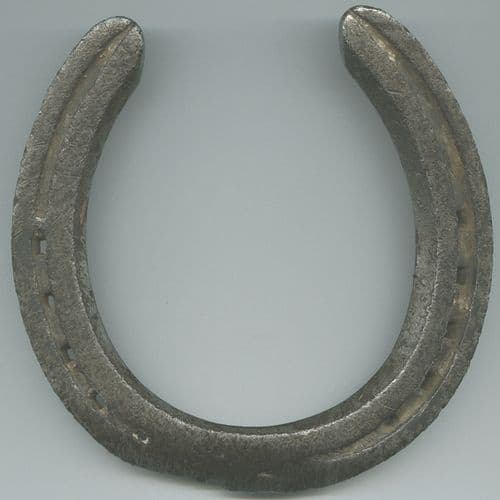
United States (adapted from European tradition)
An iron horseshoe hung above doors to collect and hold good luck, one of North America's most enduring folk charms.

United Kingdom
The humble copper coin that promises a turn of fortune when found heads-up.

