
96
General
🗿
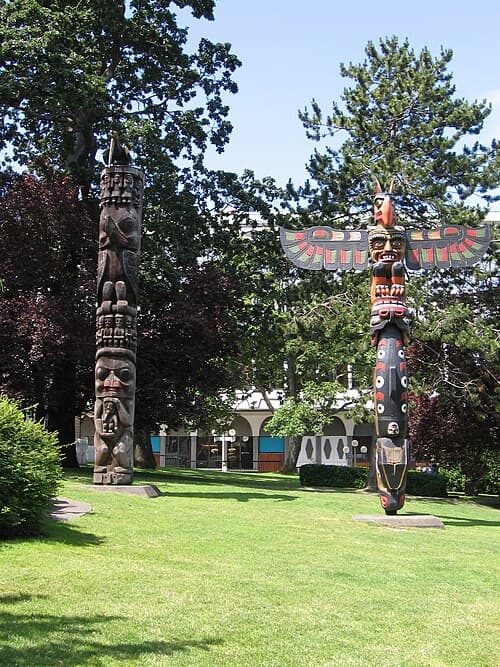
Totem Pole Charm
Pacific Northwest Coast, North America
A miniature representation of the carved cedar poles that record family histories, clan crests, and ancestral stories of Pacific Northwest peoples.
4.4Learn more →


A human-shaped stone cairn built across the Arctic as navigation markers, spiritual landmarks, and symbols of human presence in vast wilderness.
The inukshuk (plural: inuksuit) is a stone structure built by Inuit peoples across the Arctic regions of Canada, Alaska, and Greenland for thousands of years. The word 'inukshuk' means 'in the likeness of a human' in Inuktitut, describing the characteristic human-like form created by stacking flat stones. In the vast, often featureless Arctic landscape, inuksuit served crucial practical functions: marking safe travel routes, indicating food caches, directing caribou into hunting areas, and identifying landmarks for navigation across hundreds of miles of tundra and sea ice.
Beyond their practical role, inuksuit carried deep spiritual significance as markers of human presence in a landscape where human presence is fragile and precious. Building an inukshuk in a remote location was both a practical act of care for future travelers and a spiritual act of saying 'a human being was here; you are not alone; someone thought of you in this place.' This dual function — practical guide and spiritual reassurance — makes the inukshuk one of the most humanistically beautiful of all luck charms.
The inukshuk gained worldwide recognition when it was chosen as the logo for the 2010 Vancouver Winter Olympics, introducing this distinctly Canadian Arctic symbol to a global audience. Since then, small inukshuk figures in stone, resin, and metal have become popular throughout Canada and beyond as symbols of guidance, welcome, and the enduring human capacity to leave helpful marks for those who follow.
The inukshuk represents guidance, welcome, safety in vast wilderness, and the human impulse to help strangers who follow in our footsteps. It symbolizes that you are on the right path, that others have gone before you and marked the way, and that you are never truly alone in the universe. It also represents the Inuit value of community care across vast distances.
Display an inukshuk figure at the entrance to your home as a symbol of welcome and safe harbor for all who enter. Place one on your desk when working on a challenging project as a reminder that others have navigated difficult terrain and found their way. Give inukshuk figures to travelers, to people starting new phases of life, and to anyone who needs the reminder that their path is marked.
Some ancient inuksuit in Canada's Arctic have been standing for over 4,000 years, making them among the oldest continuously existing human-made structures in North America. The permanence of these stone figures — built without mortar, surviving through Arctic winters by the precision of their stacking — reflects the profound engineering knowledge of Inuit builders.
Many Inuit cultural organizations welcome the building of inuksuit in other settings as a respectful expression of appreciation for Inuit culture, especially when done with understanding of the tradition's meaning. Acknowledging the Inuit origins and not misrepresenting the practice as something you invented is the key to respectful engagement.
A cairn is a general term for any human-made pile of stones used for navigation or memorial purposes, found worldwide. An inukshuk is specifically the human-shaped stone structure of Inuit tradition, with a characteristic form suggesting a standing figure with arms outstretched. All inuksuit are cairns, but not all cairns are inuksuit.
Traditional inuksuit were positioned to point travelers in a specific meaningful direction. For a home decoration, face your inukshuk toward your front door to symbolize welcoming those who arrive, or position it to face outward as a guardian watching over your household.
Pacific Northwest Coast, North America
A miniature representation of the carved cedar poles that record family histories, clan crests, and ancestral stories of Pacific Northwest peoples.

Canada
The iconic symbol of Canadian national identity representing resilience, generosity, and the breathtaking abundance of the natural world.

Pan-Indigenous North America
A sacred symbol across countless Indigenous cultures representing freedom, spiritual connection, and messages from the divine.

