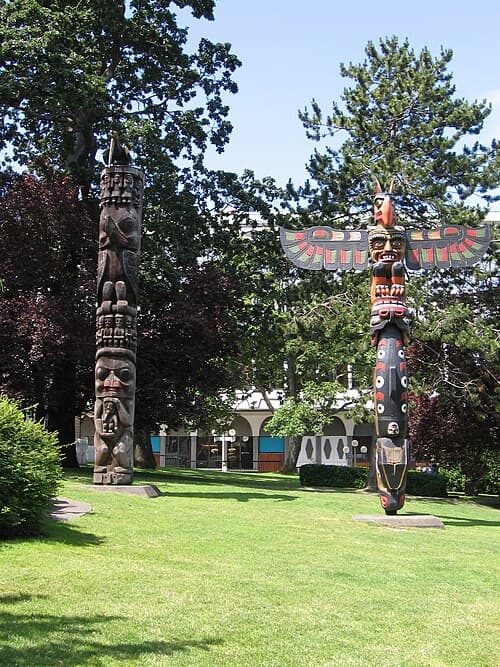
A small hand-carved cedar totem pole featuring Eagle and Bear figures in Pacific Northwest formline style
General#96 of 489 in the WorldPacific Northwest Coast, North America

Totem Pole Charm

A miniature representation of the carved cedar poles that record family histories, clan crests, and ancestral stories of Pacific Northwest peoples.

4.4Popular in 2 countries

About Totem Pole Charm

Totem poles are among the most distinctive artistic and cultural expressions of the Pacific Northwest Coast peoples — including the Haida, Tlingit, Tsimshian, Kwakwaka'wakw, and others — carved from giant red cedar trees to record family lineages, memorialize the dead, tell important stories, and display the crests that identify family and clan connections. Far from being objects of religious worship (as the dismissive 'idol' label once suggested), totem poles are more accurately understood as narrative monuments, the equivalent of illustrated genealogies carved in wood.

The figures on totem poles — Bear, Raven, Eagle, Beaver, Killer Whale, Frog, and many others — each represent specific ancestral beings, family crests, or characters in cultural stories. The position of figures on the pole, their relationships to each other, and the specific stories they tell are all meaningful and often known only to the carver's family and community. Reading a totem pole without this knowledge is like reading a family crest without knowing the heraldic language.

Miniature totem pole charms became popular souvenir items in the early 20th century, sold to tourists visiting the Pacific Northwest. While commercial versions vary enormously in quality and cultural accuracy, small totem poles carved by Indigenous artisans serve as genuine luck charms that carry the protective power of the ancestral beings depicted, as well as the skill and spiritual intention of their maker.


âœĻ

Meaning

A totem pole charm represents the power of ancestry, the protection of ancestral beings and clan guardians, and the pride of lineage and cultural identity. It honors the belief that who we are is shaped by those who came before us, and that ancestral beings continue to watch over their descendants. It invokes the specific protective animals depicted on its surface.

🙌

How to Use

Display a totem pole charm in your home in a place of honor, not on the floor. If you know which ancestral beings are depicted, research their specific stories and attributes to understand which energies they bring. Use a small totem pole charm as a focal point for meditation on ancestry, on the strength of your own lineage, and on gratitude for those who made you possible.

Fun Fact
ðŸ’Ą

The tallest totem pole in the world stands in Alert Bay, British Columbia — it is 52.7 meters (173 feet) tall and was carved by the Kwakwaka'wakw people. Totem poles traditionally were not meant to last forever; their decomposition back into the forest was understood as a natural and appropriate end to their above-ground journey.

Popular in These Countries

Frequently Asked Questions

What do the different animals on totem poles mean?â–ū

Each animal represents a specific ancestral being or clan crest with its own story. Eagle represents leadership and power. Raven represents transformation and cunning. Bear represents strength and family protection. Killer Whale represents the ocean and chief's power. However, meanings vary by nation and family, so a Haida Bear crest may have different specific meaning than a Tlingit Bear crest.

Is it disrespectful to own a totem pole charm?â–ū

A miniature totem pole purchased from an Indigenous artisan and treated respectfully is generally considered an appropriate way to honor this art tradition and support Indigenous artists economically. Mass-produced, culturally inaccurate plastic totem poles are more problematic. The key is provenance, accuracy, and respectful intention.

Why do some totem poles have a 'shame pole' tradition?â–ū

Shame poles were carved to publicly embarrass individuals or groups who had acted dishonorably — particularly those who failed to pay debts, violated agreements, or acted cowardly. They demonstrate that totem poles served as powerful social accountability tools, not just family celebration objects.

Related Charms