
275
Health
🪆
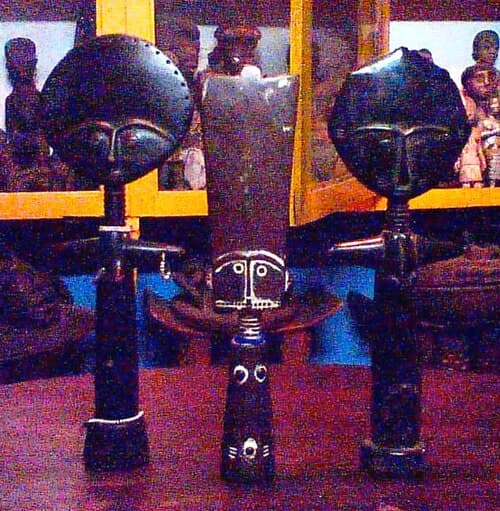
Ghanaian Fertility Doll (Akuaba)
Ghana
The iconic Akan wooden fertility doll — carried by women hoping for children and by pregnant women blessing their unborn.
4.8Learn more →


Ancient fertility and abundance symbol used since the Stone Age as a container, ornament, and sacred offering.
The ostrich egg is the largest egg produced by any living bird — a single egg can weigh 1.5 kilograms and hold the equivalent of 24 chicken eggs. For African peoples across the savanna and semi-arid regions, the ostrich egg has held profound symbolic and practical significance for tens of thousands of years. Archaeological evidence from sites in South Africa and Namibia shows that ostrich egg shells were used as water containers by Stone Age hunter-gatherers over 60,000 years ago — among the oldest examples of human technological innovation. These ancient containers were decorated with geometric engravings, suggesting that even the earliest humans attached symbolic meaning to the egg beyond its utility.
Across sub-Saharan cultures, the ostrich egg's extraordinary size and the obvious power of life it contains made it a natural symbol of fertility, abundance, and new beginnings. In ancient Egypt, ostrich feathers (symbol of Ma'at, the principle of divine order) and ostrich eggs were placed in tombs. In Ethiopia and East Africa, ostrich eggs are placed on the tops of mosques and churches as symbols of divine vigilance — the ostrich was believed to hatch her eggs through the power of gaze alone, making her a symbol of focused, unwavering attention. Decorated ostrich egg shells are given as prestige gifts and wedding offerings across East and Southern Africa.
As a lucky charm, the ostrich egg represents the miraculous potential waiting to emerge from apparently ordinary or difficult circumstances. It combines the concepts of fertility (new life), patience (the long incubation), protection (the incredibly strong shell), and abundance (its enormous size relative to other eggs). Display of a decorated ostrich egg in a home is considered to invite these qualities into the household.
Fertility, new beginnings, patient incubation of potential, extraordinary abundance, divine vigilance, and the protective power of a perfectly formed natural container.
Place a decorated ostrich egg (empty) in a home altar or as a centerpiece to attract fertility and new beginnings. Gift decorated ostrich eggs to newlyweds or new parents as abundance charms. Use ostrich egg oil (extracted from the fat) as a body treatment aligned with fertility and skin health intentions.
The San (Bushman) people of southern Africa have used ostrich egg containers as canteens for tens of thousands of years. These containers, filled with water and sealed with beeswax, were cached underground along long-distance routes — some of the oldest known examples of planned resource storage. The decorated shells found at archaeological sites show that these practical objects were also considered beautiful and meaningful.
Namibian, South African, and Kenyan craft markets produce decorated ostrich eggs ranging from simple painted versions to elaborate pyrography (burned design) works. Reputable African craft importers carry them globally. Ensure the eggs come from ostrich farms rather than wild collection, which may be restricted.
San/Bushman tradition uses geometric engravings (scratched patterns). Zulu decoration involves painting and bead application. Ethiopian artists paint elaborate religious imagery. Maasai sometimes apply beadwork. Each tradition produces a distinctive style that carries the specific cultural meaning of that tradition.
Traditional placement on church and mosque tops points the egg upward — toward heaven — invoking divine attention. In home settings, ostrich eggs are often placed at the same level as sacred objects, neither on the floor nor unreachably high. The intention of the display matters more than specific orientation in most traditions.
Ghana
The iconic Akan wooden fertility doll — carried by women hoping for children and by pregnant women blessing their unborn.

Sub-Saharan Africa
The 'Tree of Life' of Africa — ancient, life-sustaining, and filled with the memory of generations.

South Africa
National flower of South Africa and symbol of resilience, diversity, and the beauty that grows from harsh conditions.

