

297
Protection
🪨
Uluru Stone
Australia
A sacred sandstone pebble from Australia's spiritual heartland, carried as a charm of grounding, ancestral power, and transformation.
4.8Learn more →


A sacred art form encoding Dreamtime stories and ancestral wisdom as a talisman of connection and guidance.
Aboriginal dot painting is one of the world's oldest living art traditions, originating with the Anangu and other desert peoples of Australia tens of thousands of years ago. Each dot placed on canvas or ceremonial object encodes a layer of meaning drawn from the Dreamtime — the spiritual realm where ancestral beings shaped the landscape, laws, and identity of the people. Carried or displayed as a charm, a dot-painting piece bridges the everyday world and the Dreaming, inviting the holder to walk in alignment with ancestral guidance.
The concentric circles, tracks, and dotted fields that characterise this art are not merely decorative; they are maps of sacred sites, records of ceremonies, and instructions for living. When an elder creates such a work as a protective charm, they embed their intention and knowledge into every mark. Non-Indigenous admirers who carry respectfully sourced dot-painting charms do so as an act of reverence, honouring the world's oldest continuous culture and drawing on the steadying power of deep time.
Modern practitioners often commission small dot-painted stones or pendants from Aboriginal artists, ensuring the economic benefit flows directly to communities. Wearing or keeping such a piece is believed to ground the holder, dissolve confusion, and strengthen intuitive decision-making — gifts the Dreaming has always offered to those who listen.
Connection to ancestral wisdom, grounding in deep time, intuitive clarity, and spiritual guidance along life's path.
Place the charm on a natural surface — earth, wood, or stone — when meditating or making important decisions. Hold it and breathe slowly, asking your deeper self for direction. Keep it near your workspace to invite creative insight, or carry it in a pouch to maintain a sense of rootedness throughout the day.
The dot-painting style seen in galleries today was actually adapted in the 1970s to paint on canvas so sacred knowledge could be shared without revealing secret ceremonial details — the dots act as a beautiful veil over deeper encoded meanings.
Yes, provided it is purchased directly from an Aboriginal artist or a verified Indigenous-owned enterprise. Avoid mass-produced imitations, which exploit the art form without benefiting communities.
The charm primarily invokes the concept of 'Country' — the living, sentient landscape that holds memory and law — encouraging the holder to act with awareness of their place in a larger web of life.
Painted stone or canvas charms should not be submerged in water. Instead, cleanse them by placing them in morning sunlight for an hour or by passing them through the smoke of eucalyptus leaves.
Australia
A sacred sandstone pebble from Australia's spiritual heartland, carried as a charm of grounding, ancestral power, and transformation.

New Zealand
The unfurling silver fern spiral of Maori art, worn as a charm of new beginnings, growth, and the continuous renewal of life.
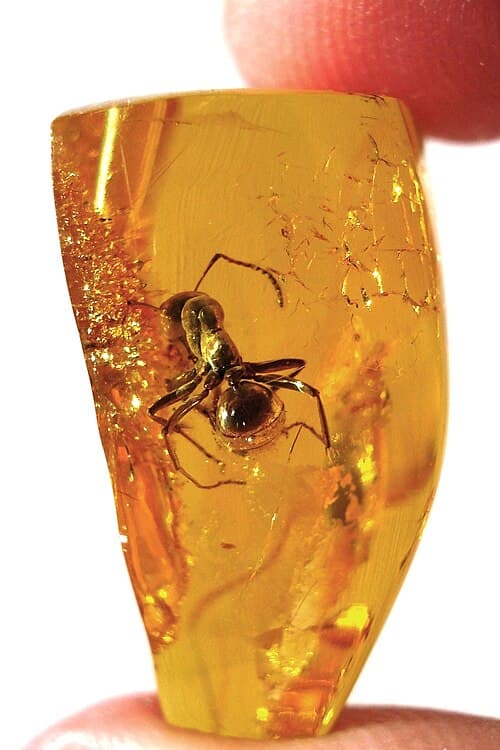
Lithuania
Ancient tree resin turned to golden stone over millions of years, carried as a charm of healing warmth, timeless wisdom, and the sun's preserved light.

