
248
Success
🧵
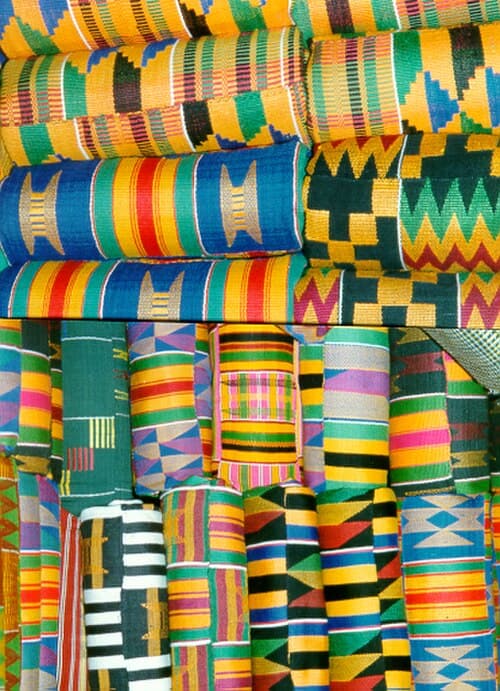
Kente Cloth Charm
Ghana
Woven silk and cotton fabric of the Akan whose patterns encode proverbs, royal achievements, and ancestral pride.
4.8Learn more →


Miniature brass figures used to weigh gold dust — encoding Akan proverbs and wisdom in tiny sculptural form.
The Akan goldweights (abrammo or abrammuo) are among the most extraordinary small-scale art forms in the world. Cast in brass using the lost-wax (cire perdue) method, these tiny weights — typically 2-10 centimeters in scale — were used to measure gold dust, which served as currency in Akan societies from around the 14th to the late 19th century. Because precision in measurement was critical to honest trade, the weights needed to be standardized, and a complex system evolved with specific weights corresponding to specific units. The genius of the Akan approach was to make these functional measurement tools into miniature sculptures: figures of animals, humans, plants, tools, and geometric forms — each encoding a specific proverb or philosophical statement.
A goldweight depicting two crocodiles sharing a single stomach (but fighting over which of them eats) illustrates the proverb 'Funtunfunefu Denkyemfunefu' — 'the crocodile that shares a stomach but fights over food' — a statement about the futility of clan rivalry when members of the same community share resources. A praying mantis weight illustrates 'however tall the praying mantis, it cannot reach the sky,' teaching humility. Each weight thus functioned simultaneously as a measuring instrument, a mnemonic for the proverb it depicted, and a tiny philosophical text. A Ghanaian merchant's set of goldweights was literally a portable library of wisdom.
Today, Akan goldweights are among the most collected West African art objects in the world. Antique weights from the 15th-19th centuries are museum pieces of extraordinary historical value. Contemporary casters in Ghana continue to produce weights in traditional forms, maintaining the tradition of encoding wisdom in metal. As a lucky charm, goldweights represent the connection of wealth to wisdom — the idea that prosperity rooted in understanding endures.
Wealth honestly measured and wisely accumulated, the encoding of wisdom in daily commercial practice, the integration of art and philosophy into economic life, and the Akan genius for making every object a carrier of meaning.
Keep a goldweight figure on your desk or in a wealth corner of your home. Choose a figure whose associated proverb speaks to your financial situation or business philosophy. Use it as a meditation object to align your approach to money with the wisdom of its encoded message.
The Akan goldweight system was so sophisticated that it had multiple standard scales — weights used for measuring in the Asante heartland differed from those used at the coast for trade with Europeans. Archaeological excavations have found goldweights dating to as early as the 14th century, predating the Asante Empire itself and showing the deep roots of this commercial culture.
Genuine antique Akan goldweights show patina consistent with age, slight imperfections from hand-casting, and measurement marks consistent with their weight-standard. Contemporary reproductions are excellent but typically show the uniformity of modern casting. Reputable African art dealers with established provenance documentation are the most reliable sources for authenticated antiques.
The artisan first creates a wax model of the desired figure, which is coated in clay and fired. The wax melts out (is 'lost'), leaving a clay mold, into which molten brass is poured. The clay is then broken away to reveal the brass casting, which is finished by hand. Each piece is unique because the wax model is destroyed in the process — making antique goldweights genuinely irreplaceable objects.
Both men and women owned gold dust and the weights to measure it. Akan women historically controlled significant commercial wealth independently of their husbands. However, the goldsmith guilds and professional traders who maintained complete weight sets were primarily male. Women's goldweights were often fewer in number but equally fine in quality.
Ghana
Woven silk and cotton fabric of the Akan whose patterns encode proverbs, royal achievements, and ancestral pride.

Ghana
Symbol of the Ashanti Empire's sacred Golden Stool — repository of the nation's soul and ultimate emblem of royal power.

Ghana
The supreme Akan symbol meaning 'Except for God' — a declaration of divine supremacy and protection.

