

2
General
🍀
Four-Leaf Clover
Ireland
The rarest clover mutation, treasured as nature's own lucky charm.
4.9Learn more →

Anthropologists have long asked why lucky charms appear in every known human culture. The answer involves our deepest cognitive architecture, our need for narrative, and the surprising social utility of shared belief.
There are no known human cultures — past or present — that lack some form of lucky charm, amulet, or protective talisman practice. This universality is itself a datum demanding explanation. Why does every human society, across vast differences in technology, religion, economy, and ecology, develop systems for using physical objects to attract good fortune and ward off harm?
Anthropologists, cognitive scientists, and evolutionary psychologists have devoted considerable attention to this question, and their answers illuminate something fundamental about human cognition and social life.
The bedrock of lucky charm practice is what cognitive scientists call agent detection — the tendency of the human mind to perceive intentional agents behind events, even when no agents are present.
Humans are extraordinarily sensitive to agency. We see faces in clouds, intentions in weather, fate in coincidences. This tendency is not a malfunction of cognition but an evolutionary adaptation: in the environment of evolutionary adaptedness (the Pleistocene savanna), a mind that err on the side of detecting agents — even when they are not there — survived better than one that missed genuine agents. Falsely detecting a predator costs you one sprint; failing to detect a real one costs you your life.
The same mechanism that makes us see faces in static makes us sense that the lucky stone carried into an exam "cares" about our outcome. The mind's default setting is agentive — objects, events, and outcomes are perceived as intentional and potentially responsive to our own intentions.
Closely related to agent detection is pattern recognition — the brain's compulsive tendency to find order in randomness. Experiments consistently show that humans will find patterns in genuinely random sequences of events, and that this tendency increases under conditions of stress and uncertainty.
Lucky charm practice is a specific application of this pattern-recognition ability: "I passed my exam after carrying this stone — carrying the stone causes exam success." This causal inference may be false, but the pattern-recognition process that produces it is the same one that discovers genuine regularities in nature and thus drives scientific discovery.
The anthropologist Bronislaw Malinowski, studying the Trobriand Islanders of the South Pacific, made a famous observation: the islanders performed elaborate magical rituals before deep-sea fishing (dangerous and unpredictable) but not before lagoon fishing (safe and predictable). Magic, Malinowski concluded, fills the gap where technical competence reaches its limit — lucky charms flourish precisely where skill and effort are insufficient to guarantee success.
Lucky charms are not merely individual psychological tools — they serve powerful social functions that help explain their universality and persistence:
Community cohesion: Shared charm practices signal membership in a community with common values and worldview. Wearing a red string bracelet, exchanging red envelopes at Lunar New Year, pinning a malocchio horn inside your jacket — these practices mark you as belonging to a specific group with specific beliefs. This social signalling function strengthens the bonds within communities and helps maintain the trust networks essential for economic and social cooperation.
Ritual coordination: Lucky charms often appear at threshold moments — births, weddings, exams, business launches, journeys — when communities need to come together to support an individual through a transition. The shared ritual of the charm practice provides a structure for this communal support that transcends differences in individual belief.
Status communication: In many cultures, the quality, rarity, and origin of lucky charms communicates social status. A jade pendant of exceptional quality, an authentic Italian horn in heavy gold, a dreamcatcher made by a known master craftsperson — these objects signal the owner's cultural knowledge, taste, and social position in ways that generic mass-produced equivalents cannot.
Intergenerational transmission: Lucky charms passed down through families — a grandmother's ring, a grandfather's lucky coin, a great-aunt's prayer beads — serve as tangible connections between the living and the dead, carrying the accumulated weight of family memory and identity. This function makes them among the most emotionally significant objects in any family's material culture.
Anthropologist David Graeber argued that the most fundamental human social skill is the ability to act in the face of radical uncertainty. We cannot know whether our crops will grow, whether our children will survive, whether our businesses will succeed, whether our relationships will endure. And yet we must act — must plant, must raise children, must do business, must love — despite the uncertainty.
Lucky charms are among the most widespread technologies for managing this existential challenge. By engaging in a ritual that symbolically asserts some influence over an uncertain outcome, the charm user is able to commit to action rather than being paralysed by the awareness of risk. The charm is less about controlling outcomes than about enabling the human capacity for committed action under uncertainty.
This is why anthropologists consistently observe that charm use increases — rather than decreasing — among successful, sophisticated communities. The more competitive the exam system, the more elaborate the exam-luck rituals. The more high-stakes the athletic competition, the more personalised the pre-game superstition. The more uncertain the financial markets, the more elaborate the feng shui consultation.
Cognitive anthropologist Pascal Boyer has argued that the human mind is uniquely structured to generate and use symbolic objects — things that mean more than their physical properties would suggest. A stone is just a stone; a lucky stone given by a dying grandmother is an object saturated with memory, identity, relationship, and the hope of continuation.
The capacity to invest objects with this kind of meaning is what linguists call symbolic thought and what psychologists call object relations. It is the same cognitive capacity that produces art, religion, language, and mathematics. Lucky charms are, in Boyer's framework, a natural expression of the symbolic mind applied to the management of daily uncertainty.
The anthropologist Edward Tylor proposed a famous evolutionary model in which human belief progresses from magic (primitive) through religion to science (advanced). Most contemporary anthropologists reject this teleological framework — it implies that lucky charm practices are primitive survivals that enlightened modernity should be leaving behind.
The evidence suggests otherwise. Lucky charm practice is robust in precisely those countries with the highest scientific literacy and the most secular populations — Japan, South Korea, the United Kingdom, the United States — and is actively increasing in many of them.
A better model treats magic, religion, and science not as sequential stages but as complementary responses to different types of uncertainty. Science is extraordinarily powerful at reducing technical uncertainty — how to grow crops, treat disease, build bridges. It is far less effective at addressing the existential uncertainty that attends all human life — the uncertainty about meaning, relationship, identity, and fate.
Lucky charms address themselves to that second category of uncertainty. As long as human beings live in a world whose outcomes they cannot fully control or predict, the lucky charm will continue to offer what it has always offered: a small, beautiful, meaningful gesture of hope.
That, perhaps, is why every culture has them.
Ireland
The rarest clover mutation, treasured as nature's own lucky charm.
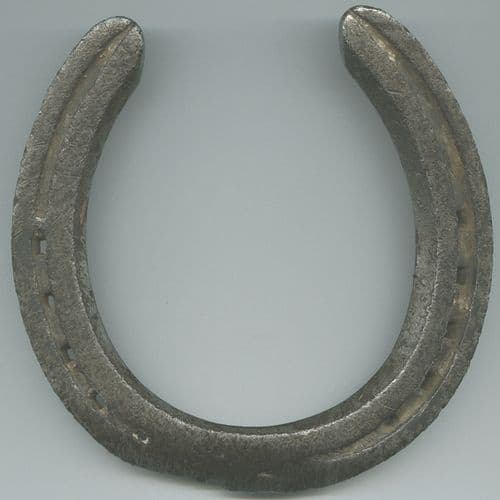
United Kingdom
An iron crescent hung above doorways to catch and hold good luck.

Egypt
The sacred Egyptian beetle of Khepri, symbol of transformation, rebirth, and the rising sun.

Egypt
The ancient Egyptian key of life, a symbol of immortality and the union of masculine and feminine forces.
In Italy, 13 is lucky and 17 is cursed. In China, 4 is feared and 8 is coveted. In many cultures, Friday the 13th is just another day. Explore how different civilisations have constructed entirely different systems of luck — and what that reveals about human nature.
The sea has always been humanity's most dangerous workplace. From Phoenician amulets to modern-day tattoo traditions, explore the rich world of maritime lucky charms — objects that sailors have trusted with their lives for millennia.
The ancient Silk Road was not merely a trade route for silk and spices — it was the world's first great highway of symbolic exchange, carrying lucky charms, amulets, and magical beliefs between East and West for over a millennium.

