

32
Protection
✝️
Crucifix
Early Christianity (Rome)
The Crucifix — a cross bearing the corpus (body) of Christ — is the central symbol of Christianity and one of the most powerful protective charms in the Western world.
4.8Learn more →

Pacific
4 charms from this country
Papua New Guinea has the world's most linguistically and culturally diverse small territory — over 800 languages and thousands of distinct cultural traditions. Protective amulets vary dramatically from one valley to the next. The bilum (string bag) woven by Highland women is not merely functional but encodes protective patterns in its weave. Specific shell valuables — kina (pearlshell), toea (conus shell) — are the primary prestige and protective objects across much of the country.
Ancestral spirits (masalai) must be properly propitiated to avoid misfortune, and specific objects, plants, and ritual actions serve this purpose. The spectacular sing-sing ceremonial gatherings involve costumes incorporating protective bird feathers, shells, and pig tusks. Christianity is now widespread and crosses and rosary beads are standard protective objects. The bird of paradise — the national symbol — carries associations of supernatural beauty and divine favor.
Early Christianity (Rome)
The Crucifix — a cross bearing the corpus (body) of Christ — is the central symbol of Christianity and one of the most powerful protective charms in the Western world.
Medieval Europe
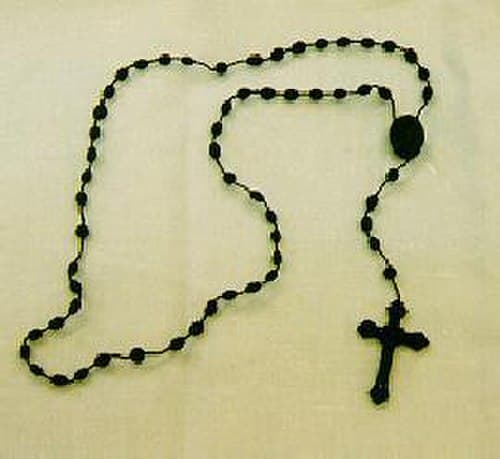
Rosary beads are the most recognizable Catholic prayer tool in the world, used by hundreds of millions for meditative prayer, protection, and the invocation of divine grace.

West Africa
Ancient African currency and fertility symbol used across the continent for centuries.

Papua New Guinea
The spectacular plume bird of Papua New Guinea, carried as a charm of extraordinary achievement, natural glory, and the rewards of authentic self-display.

