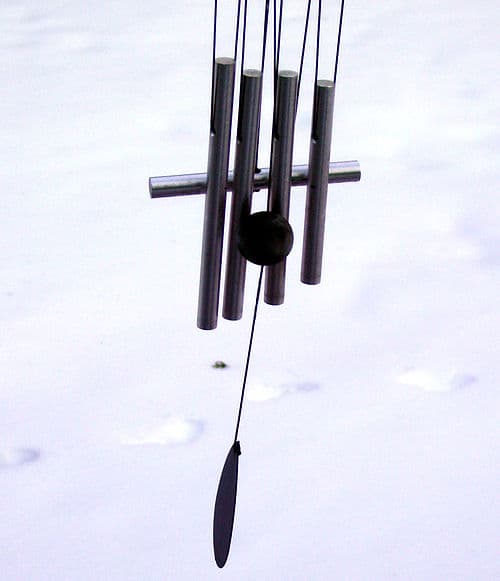
A set of silver metal wind chimes hanging from a decorative top piece, tubes of varying lengths producing gentle musical tones
General#483 of 489 in the WorldAncient China / India

Wind Chime

Wind chimes have been used for thousands of years in Asia and worldwide to disperse negative energy, attract good fortune, and fill spaces with the healing, harmonizing vibrations of sound.

4.6Popular in 5 countries

About Wind Chime

The earliest wind chimes — called fenglings in China and suchlike in India — were made of bone, shell, bamboo, and metal and hung at the entrances of temples, palaces, and homes over five thousand years ago. Their primary function was to use sound to scare away evil spirits (which were believed unable to tolerate certain frequencies), to attract benevolent forces, and to signal the presence of divine energy through the medium of wind — itself considered a manifestation of qi (life force energy) in motion.

In feng shui practice, wind chimes are one of the most powerful feng shui cures and enhancements. Different materials are used for different purposes: metal chimes in the northwest and west sectors activate helpful people and children luck; wood chimes in the east and southeast activate health and wealth; ceramic chimes in the northeast and southwest activate earth energy for relationships and knowledge. The number of tubes also carries significance — six or eight metal tubes are considered most auspicious in Chinese feng shui.

Beyond feng shui, wind chimes have spread worldwide as beloved garden ornaments that create a constant, gentle music through the breath of nature itself. In Japan, furin (wind bells) are hung in summer to create the sound of coolness. In Bali, elaborate chimes guard every important space. In the American Southwest, copper wind chimes have become as much a part of regional aesthetic as turquoise jewelry.


Meaning

Dispersal of negative energy through sound vibration, attraction of positive qi, alert to the presence of divine wind (spirit), peace, harmony, and the healing power of resonant sound.

🙌

How to Use

Hang metal wind chimes outside your front door or in the northwest sector of your garden to attract helpful people and good opportunities. Use bamboo or wooden chimes in the east (health) or southeast (wealth) area of your garden or porch. Place a small set of chimes near a window you frequently leave open to continuously circulate and refresh the energy of the adjacent room.

Fun Fact
💡

Sound healing research has found that the specific frequencies produced by metal singing bowls and wind chimes — typically between 40 and 200 Hz depending on size and material — overlap with the brain's alpha and theta wave frequencies (associated with relaxation and meditative states), providing a scientific basis for the intuitive understanding that these sounds promote peace and healing.

Popular in These Countries

Frequently Asked Questions

How many tubes should a lucky wind chime have?

In feng shui, six and eight metal tubes are considered most auspicious (six for helpful people luck, eight for wealth). Five tubes represent the five elements. Avoid four tubes (phonetically associated with death in Chinese). For non-feng-shui use, choose a number that sounds harmonious to you.

What material wind chime is best for attracting wealth?

Metal wind chimes in the southeast sector (wealth and abundance area) are the traditional feng shui recommendation. Brass, copper, and silver-toned aluminum are all appropriate metals. Bamboo chimes in the east sector support health which supports wealth.

Can I use wind chimes indoors?

Yes, particularly in spaces with air circulation near windows or fans. Indoor wind chimes made of delicate materials — crystal, small bells, or lightweight metals — produce more subtle sound appropriate for interior spaces.

Related Charms