
219
Protection
🚪
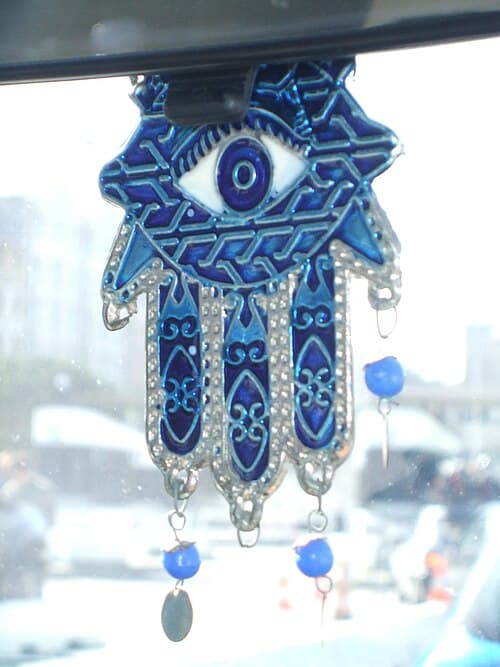
Tunisian Hand of Fatima Door Knocker
Tunisia
A brass door knocker shaped as the Hand of Fatima, protecting Tunisian homes at the threshold between public and private worlds.
4.4Learn more →


The lucky Tunisian fish amulet, a pre-Islamic fertility and abundance symbol still widely used across the country.
The fish is one of Tunisia's most beloved protective and lucky symbols, deeply embedded in the country's coastal culture and its blend of Berber, Phoenician, Roman, Jewish, and Islamic traditions. The stylized fish form appears as door decorations, hammered into brass wall hangings, printed on fabric, tattooed on skin, and sold in silver and ceramic jewelry throughout Tunisia. Its use predates Islam and likely traces to the Phoenician and Carthaginian cultures that made Tunisia's coastal cities major Mediterranean powers — for a seafaring people, the fish was the source of life and wealth, making it a natural symbol of abundance and good fortune.
In Tunisian Jewish tradition the fish carries particularly strong lucky associations — it is connected to the concept of 'ayin hara' (evil eye) protection, since fish are believed to be unable to cast or receive the evil eye because they live entirely underwater, invisible to the sky where the jealous gaze travels. Fish amulets were therefore considered doubly protected — unable to be harmed by the evil eye and unable to accidentally cause it. This reasoning made fish one of the most logically watertight of all protective symbols, so to speak.
The Tunisian fish charm became internationally known in part through the work of Nabeul and Sidi Bou Said artisans who produce beautiful hand-painted ceramic fish tiles and silver fish pendants. These have traveled globally as gifts and souvenirs, carrying the warmth of Tunisian coastal culture and the layered protective symbolism of one of the Mediterranean's oldest trading civilizations.
Abundance, fertility, protection from the evil eye, and good fortune — particularly in ventures connected to water, travel, trade, and the sea. The fish promises plentiful return for honest work and brave venture.
Hang a fish symbol in a kitchen or dining area to attract food abundance and prosperity. Wear as a pendant near the sea for protection during water travel. Gift to fishermen, sailors, traders, and anyone whose livelihood involves risk and hope of return. Place in a home or business to encourage prosperous flow.
The town of Nabeul in Tunisia is famous for its hand-painted ceramic fish tiles that have become globally recognized as a symbol of Tunisian craft. The blue and white fish motif on these tiles is directly descended from Andalusian ceramic traditions brought to Tunisia by Muslims and Jews expelled from Spain in 1492.
In Jewish North African tradition, fish live underwater and are therefore unseen by the sky where the evil eye travels. Because they are neither seen nor seeing (in the context of the evil eye), they cannot be harmed by it or cast it. This makes them powerful protective symbols and amulets against the evil eye.
They share ancient Mediterranean roots — the fish as a prosperity and life symbol predates both Christianity and Islam in the Mediterranean basin. While the Christian ichthys developed specific theological meaning, the Tunisian fish symbol maintained its older pre-religious associations with abundance, fertility, and the sea's generosity.
The medinas of Tunis, Nabeul, Sidi Bou Said, and Sousse are the best sources. Nabeul is particularly known for ceramic fish tiles. The Tunis medina has silver fish pendant jewelry alongside ceramic options. Many online Tunisian craft sellers also offer authentic hand-made examples.
Tunisia
A brass door knocker shaped as the Hand of Fatima, protecting Tunisian homes at the threshold between public and private worlds.
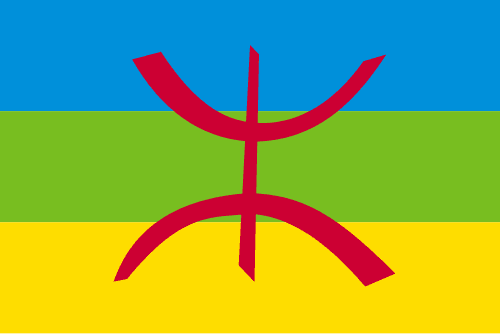
Morocco / Algeria / Tunisia
Ancient Amazigh geometric cross amulets carried for protection and tribal identity across North Africa's indigenous people.

Morocco
A miniature of the iconic conical Moroccan cooking pot, symbolizing abundance, hospitality, and the warmth of home.

