

27
Wealth
💛
Citrine Crystal
Brazil
The golden abundance crystal, known as the Merchant's Stone, carried to attract wealth, success, and the warm energy of solar prosperity.
4.8Learn more →


The golden gem of authentic truth and abundant joy, carried as a charm for manifesting desires, expressing personal truth, and attracting magnificent good fortune.
Topaz is an aluminium silicate mineral that occurs in a wide range of colours — colourless, blue, yellow, orange, pink, and the precious golden variety called 'Imperial Topaz' from Brazil's Ouro Preto region. True topaz is quite distinct from 'blue topaz' — which is usually irradiated colourless topaz — and from the misleadingly named 'smoky topaz' (actually smoky quartz). Imperial Topaz, in vivid orange-gold, is the rarest and most valuable natural colour, found almost exclusively in the Capão mine near Ouro Preto, Brazil.
The name topaz may derive from the Sanskrit tapas meaning 'fire' or 'heat,' reflecting the stone's solar warmth. Ancient Egyptians called it the 'golden stone of Ra' and believed it was empowered by the sun god's energy. Greeks believed topaz could make the wearer invisible in times of danger. Medieval Europeans connected it to the sun and to the virtue of truth — carrying topaz was believed to reveal secrets, expose lies, and ensure that the holder's own truth was clearly expressed and heard.
In contemporary crystal work, topaz is used to manifest desires into reality (yellow/gold), to support authentic self-expression (all colours), and to amplify whatever intention is most honestly and clearly held by the wearer. It is particularly effective when the holder has a very specific, clearly articulated desire — topaz appears to reward clarity and authenticity of intention above all other qualities.
Manifestation of clearly held desires, authentic self-expression, abundant good fortune, the revelation of truth, and the solar confidence of those who know exactly what they want.
Write your most important desire on a piece of paper, fold it, and place it under a topaz overnight. Wear Imperial Topaz when seeking career advancement or when presenting your most authentic self. Use blue topaz at the throat when practising creative expression or public speaking. Charge in direct sunlight during solar hours (10am–2pm).
The Braganza Diamond in the Portuguese Crown Jewels — a 1,640-carat stone long believed to be the world's largest diamond — was identified in the 20th century as colourless topaz. The misidentification was sustained for over 300 years because topaz and diamond were easily confused before systematic gemological analysis, a confusion that made topaz arguably the most impactful gemstone impostor in royal history.
Yes, both are topaz (aluminium silicate fluorohydroxide) but with different colours. Most blue topaz is colourless topaz that has been irradiated and heat-treated to produce blue colour. Golden Imperial Topaz is naturally coloured. Both are genuine topaz with related but distinct energetic qualities.
Its vivid orange-gold colour occurs naturally and is found almost exclusively from a single mine in Ouro Preto, Brazil. As a result it is quite rare. Its golden fire makes it particularly potent for solar-energy work — manifestation, prosperity, and the confidence of authentic self-expression.
No — they are often confused because both appear yellow-orange, but they are completely different minerals. Citrine is quartz; topaz is topaz. 'Topaz quartz' and 'smoky topaz' are trade names for varieties of quartz, not genuine topaz. Genuine topaz is significantly denser and harder than quartz.
Brazil
The golden abundance crystal, known as the Merchant's Stone, carried to attract wealth, success, and the warm energy of solar prosperity.

Sri Lanka
The heavenly blue stone of wisdom and divine favour, worn as a charm of mental clarity, loyal devotion, and the blessings of those who seek truth in all things.
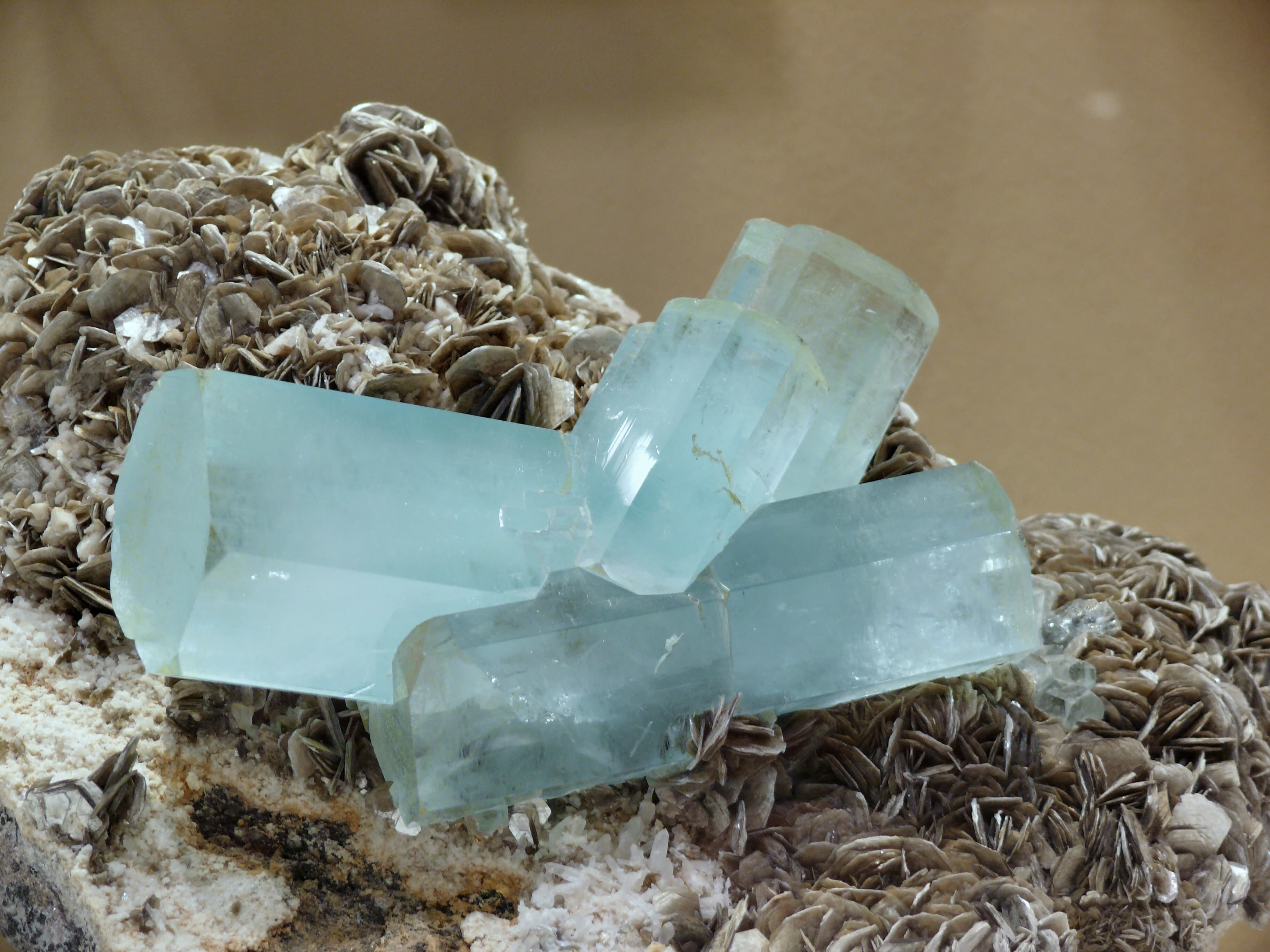
Brazil
The serene blue-green beryl of the sea, carried as a charm for clear communication, emotional calm, courageous truth, and safe passage through any life crossing.

