

267
Protection
🛡️
Zulu Shield
South Africa
The cowhide shield of Zulu warriors — a regimental identity marker and protective spiritual object.
4.7Learn more →


The cowhide warrior shield of Eswatini's umchwasho regiment — worn at the Incwala and Umhlanga ceremonies.
The Kingdom of Eswatini (formerly Swaziland) maintains one of Africa's most intact living royal traditions, and at its heart are the annual national ceremonies in which the nation's young people serve as regiments before the king. The Swazi warrior shield (the indigenous umgalelo or shield type) is carried by young male warriors during the Incwala (First Fruits) ceremony — a deeply sacred event in which the king's powers are ritually renewed and the nation's connection to its ancestors is strengthened. The shields used in these ceremonies are not antiques but living objects that are made, used in ceremony, and retired in an ongoing cycle of renewal.
Swazi shields are made from cowhide in forms similar to those of related Nguni peoples (Zulu, Xhosa, Ndebele) but with their own distinctive proportions and patterns. Young men who have not yet completed their warrior service carry shields to demonstrate their status as active members of the royal regiment system. The shields are thus markers of civic identity and national loyalty — visible declarations that the bearer stands ready to defend the kingdom. The ceremonies in which they appear connect the participants to the deep history of Swazi statehood, which traces an unbroken royal line to the late 18th century.
Eswatini's royal traditions are unusual in the contemporary world for their continued genuine ceremonial life — these are not tourist performances but actual living practices with real social and spiritual significance. The Swazi shield, as an object of these living traditions, carries the energy of an intact cultural system in a way that is increasingly rare. As a charm, it represents the power of cultural continuity and the strength that comes from knowing exactly who you are and where you come from.
Cultural continuity and national identity, the strength of community solidarity behind a legitimate king, civic duty and readiness to defend what matters, and the living connection to Swazi ancestral heritage.
Display a Swazi shield as a symbol of cultural pride and the strength of belonging to an identifiable community with deep roots. Use it in home decor to invoke protection rooted in legitimate tradition rather than aggressive force. It is particularly appropriate for those working to maintain cultural traditions in the face of modernizing pressure.
The Incwala ceremony of Eswatini is one of Africa's most sacred royal rituals and one of the few for which filming and external observation are still heavily restricted. The king's participation in specific rites — eating the first fruits, wearing specific regalia, performing ritual actions — is understood to literally renew his supernatural power and through it the power of the entire nation to thrive in the coming year.
The Incwala (First Fruits) is the sacred ceremony of royal renewal performed in December-January, primarily involving male warriors. The Umhlanga (Reed Dance) is a late summer ceremony in which thousands of young women bring reeds to the queen mother's residence. Both are national ceremonies of extraordinary scale but serve different ritual purposes.
The Umhlanga (Reed Dance) is open to respectful visitors and is one of the largest cultural gatherings in Africa. The Incwala is more restricted, with some sections open to the public but the most sacred portions closed to outsiders. Photography restrictions vary by ceremony and portion.
Eswatini under King Mswati III is sub-Saharan Africa's last absolute monarchy, where the king rules without a democratically elected parliament with legislative power. The country's governance is a source of political controversy, even as its cultural traditions are widely respected as among the most intact in the region.
South Africa
The cowhide shield of Zulu warriors — a regimental identity marker and protective spiritual object.
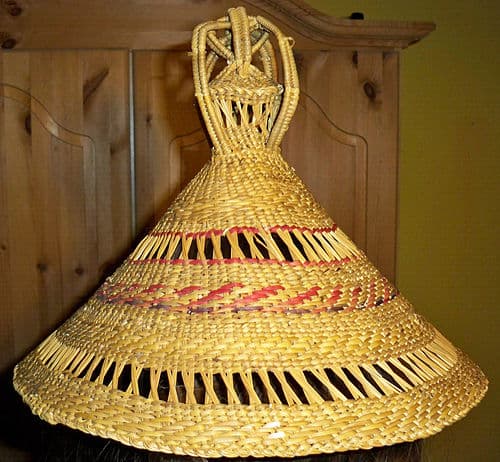
Lesotho
The iconic conical woven hat of Lesotho — national symbol of the mountain kingdom and its people.

South Africa
National flower of South Africa and symbol of resilience, diversity, and the beauty that grows from harsh conditions.

