

259
General
🎨
Tanzanian Tingatinga Art
Tanzania
Bright, narrative East African art form celebrating animals and Tanzanian life — carrying joy and the power of beauty.
4.5Learn more →


Rwanda's ancient geometric art form made from cow dung — a unique and sophisticated visual tradition of extraordinary beauty.
Imigongo is one of Africa's most unusual and beautiful art forms — geometric paintings made from cow dung mixed with natural pigments, created in the Kirehe district of eastern Rwanda near the Ugandan border. The tradition is said to have originated in the 18th century at the court of Prince Kakira, son of the Rwandan king Ruganzu II Ndori, who reportedly invented the technique by playing with cattle dung and discovering its artistic potential when dried. From this courtly origin, imigongo spread throughout the Kayonza and Kirehe districts, where it became a distinctly local art form practiced primarily by women who decorated their homes and created objects for personal and ceremonial use.
The imigongo process is technically demanding: fresh cow dung is worked while malleable into raised, three-dimensional geometric patterns on wooden boards or calabashes. When dry, the surface is painted with natural pigments — ash white, charcoal black, ocher red, and natural clay grey — in carefully defined geometric areas that follow the raised dung outlines. The resulting patterns are bold, graphic, and sophisticated: spirals, interlocking curves, concentric diamonds, and abstract forms that follow their own internal logic. Despite its humble material, the finished imigongo is a work of genuine visual sophistication that holds up well against any other geometric art tradition in the world.
Imigongo survived Rwanda's devastating 1994 genocide, and the tradition was revived as part of the country's cultural reconstruction, with women's cooperatives in eastern Rwanda now producing high-quality imigongo for national and international markets. The art form has become a symbol of Rwandan resilience, creativity, and the extraordinary human capacity to find beauty in the most unexpected materials.
Creative ingenuity and finding beauty in unexpected materials, the resilience of cultural tradition through catastrophe, the geometric order underlying natural forms, and the pride and creativity of Rwandan identity.
Display imigongo in a home or workspace as an object of contemplation and as a reminder that extraordinary beauty can emerge from humble materials and difficult circumstances. Use the spiral forms — common in imigongo — as meditation focal points for centering and the discovery of hidden order in apparently chaotic situations.
Imigongo was used during Rwanda's post-genocide reconstruction as a deliberate tool for cultural healing and economic recovery for women survivors. The Agahozo-Shalom Youth Village, which houses young people orphaned by the genocide, incorporated imigongo among its cultural programs. The tradition's survival across Rwanda's worst modern catastrophe is itself a powerful testimony to art's role in human resilience.
Yes — fresh cattle dung is the primary material, worked while pliable into three-dimensional raised patterns. When dried, it becomes hard, lightweight, and remarkably stable. The smell dissipates completely once dry. The material's availability throughout the cattle-raising communities of eastern Rwanda made it a sensible artistic choice that has been refined into extraordinary technique over centuries.
Traditional imigongo was used to decorate the exterior walls of homes in Rwanda's drier eastern districts, suggesting reasonable weather resistance. Modern imigongo on wooden boards or canvas is typically treated for stability but is best kept indoors away from direct moisture. Untreated pieces can be damaged by prolonged humidity.
The most reliable sources are the women's cooperatives operating in Kayonza District in eastern Rwanda, many of which sell directly and through online platforms. The Rwanda Cultural Heritage Academy and various Rwandan government cultural export programs have also supported imigongo sales internationally. Ensure pieces come with documentation of cooperative production.
Tanzania
Bright, narrative East African art form celebrating animals and Tanzanian life — carrying joy and the power of beauty.

Uganda
UNESCO-listed Ugandan bark cloth — an extraordinary material made from fig tree bark used for royal ceremonies and everyday life.
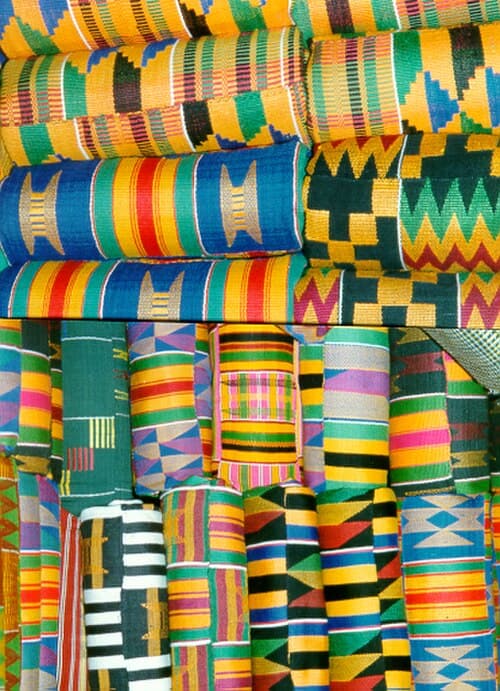
Ghana
Woven silk and cotton fabric of the Akan whose patterns encode proverbs, royal achievements, and ancestral pride.

