

302
Success
☀️
Aztec Sun Stone
Mexico (Aztec/Mexica civilization)
A replica of the great Mexica calendar stone, representing cosmic time, solar power, and the cyclical nature of all creation.
4.6Learn more →


A symbol of the feathered serpent deity — the union of earthly and divine, wisdom and power, sky and earth — one of Mesoamerica's greatest spiritual concepts.
Quetzalcoatl, the Feathered Serpent, is one of the most important and complex deities in Mesoamerican religious thought, appearing across Aztec, Toltec, and Maya civilizations under different names but with consistent attributes. The name itself is a paradox made beautiful: quetzal refers to the resplendent quetzal bird with its iridescent emerald tail feathers, sacred throughout Mesoamerica, while coatl means serpent — the creature of the earth and underworld. Together they represent the union of heaven and earth, the divine made manifest in the physical world.
In Aztec tradition, Quetzalcoatl was the creator god who made humanity from the bones of previous creations, the wind god Ehecatl who set the world in motion, the god of learning and the arts, and the mythological priest-king of the Toltec civilization who was driven from Tula and promised to return from the east — a prophecy that complicated the Spanish Conquest when Hernan Cortés arrived in the Aztec year associated with Quetzalcoatl's predicted return.
The quetzal feather itself, specifically the long emerald tail feathers of the male resplendent quetzal, was the most valued material in Mesoamerican luxury trade, prized above jade and cacao. Headdresses of quetzal feathers were worn only by the highest elites and deities' representations. A single quetzal tail feather charm represents this entire complex of royalty, divinity, and the union of earthly and heavenly realms.
The Quetzalcoatl feather represents the impossible union of opposites — sky and earth, divine and mortal, wisdom and physical power. It embodies the aspiration to integrate these seemingly contradictory forces within oneself, becoming fully human while reaching toward the divine. It symbolizes creative intelligence, the origin of civilization, and the understanding that the most sacred things are often the most beautiful.
Use Quetzalcoatl imagery or a quetzal feather charm when working on creative projects, when studying or pursuing wisdom, or when navigating situations that require balancing different roles or identities simultaneously. This is a powerful charm for artists, scholars, teachers, and leaders — anyone who must embody multiple aspects of life at once. Keep one at your desk or creative workspace.
The resplendent quetzal (Pharomachrus mocinno) is so closely associated with freedom and sovereignty that it cannot survive in captivity — caged quetzals die. This quality made the bird even more sacred to the Maya and Aztec: you could harvest a few feathers from a living bird but could never own the bird itself. The quetzal thus became a symbol of freedom that cannot be possessed, only honored.
Yes — Aztec accounts suggest that Moctezuma II may have initially believed Hernán Cortés to be the returning Quetzalcoatl, whose legendary departure from Tula was connected to the eastern horizon and a specific calendar year that coincided with Cortés's arrival in 1519. However, historians debate how much of this association was Aztec belief versus Spanish post-conquest narrative construction.
The resplendent quetzal is the national bird of Guatemala, depicted on the country's flag, and the Guatemalan currency is called the quetzal (GTQ). The bird remains critically endangered due to habitat destruction, making it both a sacred symbol and a conservation priority across Central America.
While no feather fully replicates the specific meaning of the resplendent quetzal's tail feathers, peacock feathers share the iridescent emerald coloring and the association with royalty, beauty, and protection from the evil eye. They carry their own powerful symbolism and make excellent substitutes for those working with Mesoamerican-inspired spiritual practices.
Mexico (Aztec/Mexica civilization)
A replica of the great Mexica calendar stone, representing cosmic time, solar power, and the cyclical nature of all creation.
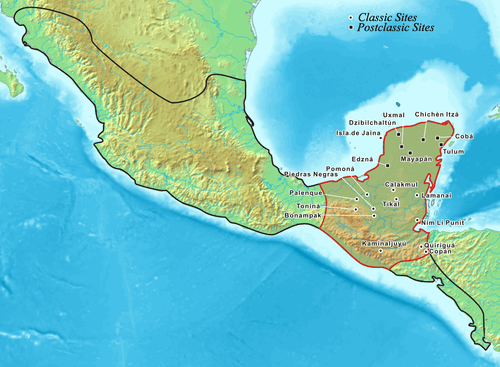
Guatemala and Mexico (Maya civilization)
The sacred green stone of Maya royalty, associated with immortality, royal power, and the life-giving force of the maize god.

Pan-Indigenous North America
A sacred symbol across countless Indigenous cultures representing freedom, spiritual connection, and messages from the divine.

