Spiral
Neolithic Europe / Multiple traditions
The spiral is one of humanity's oldest sacred symbols, found in Neolithic art worldwide, representing the cycles of life, evolution, growth, and the journey inward to the center of the self.
The labyrinth is an ancient walking meditation symbol found worldwide, representing the journey inward to the center of the self and the winding path of spiritual growth.
The labyrinth is distinguished from a maze by its fundamental nature: where a maze has multiple paths and dead ends designed to confuse, a labyrinth has a single winding path that leads inevitably to the center and back out again. There are no wrong turns in a labyrinth — only the journey. The most famous labyrinth in Western tradition is that of ancient Crete, said to contain the Minotaur at its center and to have been the creation of Daedalus. Labyrinths appear in the rock art of Sardinia, the Bronze Age, Native American petroglyphs, and Hindu temple mandalas.
In medieval Christianity, labyrinth patterns were laid in the floors of great cathedrals — most famously Chartres Cathedral in France, where the labyrinth dating to 1201 CE is still intact. Pilgrims who could not make the journey to Jerusalem would walk the cathedral labyrinth on their knees as a substitute pilgrimage, the winding path symbolizing the soul's journey through life toward the divine center. Today, labyrinth walking has been revived worldwide as a contemplative practice for stress reduction, decision-making, and spiritual centering.
As a charm, the labyrinth reminds its wearer that there are no shortcuts on the path to what truly matters, that the winding way is the true way, and that arriving at the center — at one's own truth — is always worth the journey.

The spiritual journey, contemplation, the winding path to truth, trust in the process, and the wisdom found at the center of the self.
Wear a labyrinth pendant when facing a complicated problem that requires patient, step-by-step thinking rather than quick answers. Trace a finger labyrinth (a labyrinth pattern on a flat surface traced with the fingertip) as a meditative stress-relief practice. Use labyrinth imagery in a journaling practice to explore a question you cannot resolve logically.
The labyrinth at Chartres Cathedral is exactly the same diameter as the rose window directly above the main entrance — if the window were folded down to the floor, it would cover the labyrinth perfectly, suggesting the two were designed as complementary cosmic symbols.
Absolutely. The symbolic meaning carries fully into jewelry and ornamental forms. Many people trace labyrinth patterns with their finger or gaze as a meditative practice that achieves similar calming and centering effects.
It has been used across many religious traditions including Greek paganism, Christianity, Hinduism, and indigenous traditions worldwide. It is as much a human universal as a religious specific.
Yes. The winding path is believed to confuse negative energies that cannot navigate complexity, while the wearer's intention remains protected at the heart of the pattern. Some traditions place labyrinth images at entrances to create this effect.
Neolithic Europe / Multiple traditions
The spiral is one of humanity's oldest sacred symbols, found in Neolithic art worldwide, representing the cycles of life, evolution, growth, and the journey inward to the center of the self.
Universal / All cultures
The circle is the most universal geometric symbol in human culture, representing wholeness, eternity, protection, and the unbroken cycle of all existence.
Ancient Mesopotamia / Multiple traditions
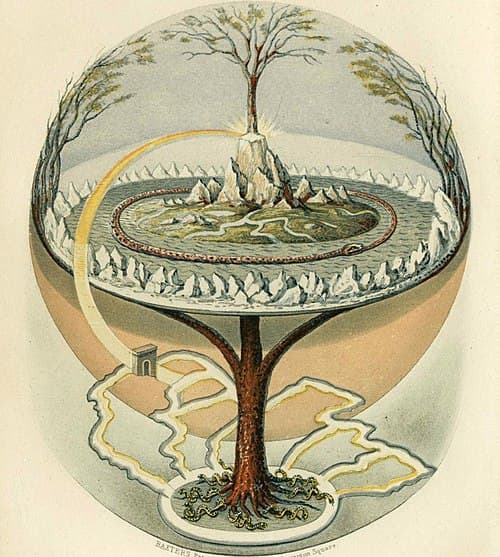
The Tree of Life is a universal symbol found in nearly every major world culture, representing the interconnection of all life, ancestral roots, and the continuous cycle of growth and renewal.