

344
General
🌰
Acorn
United Kingdom
The tiny seed of the mighty oak, carried for slow-growing but lasting luck.
4.3Learn more →

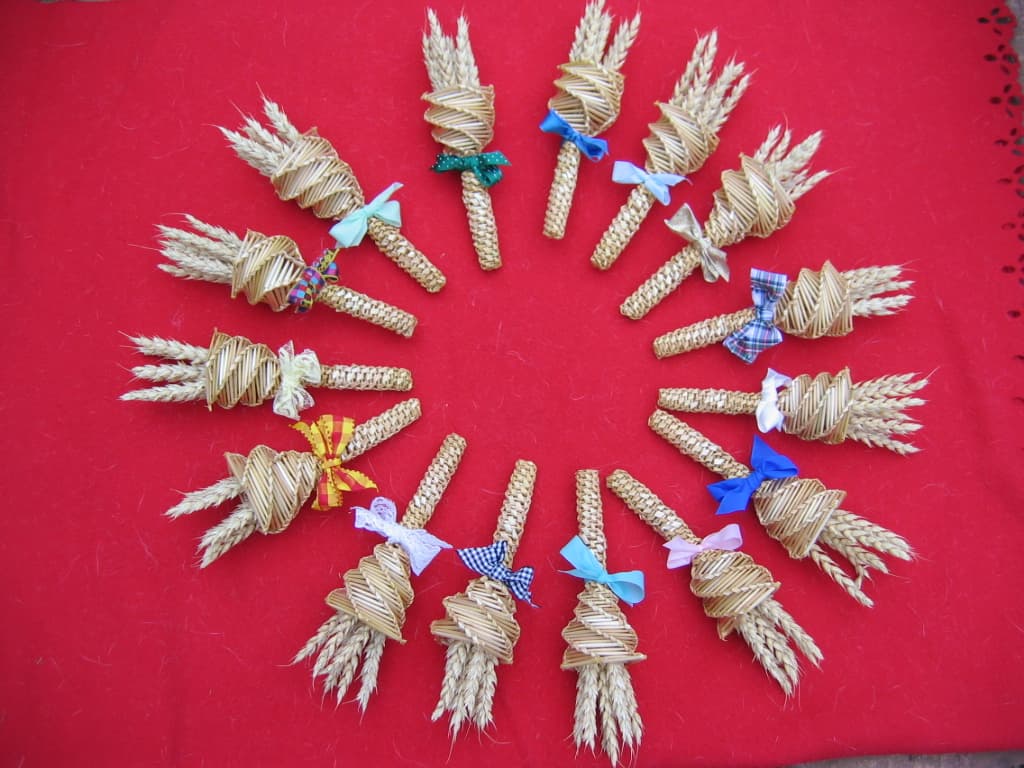
The woven straw figure that captures the harvest spirit and releases it for next year's crop.
The corn dolly — sometimes called a corn maiden, harvest doll, or kern baby — is one of Britain and Northern Europe's oldest and most practically grounded lucky charms: a figure woven from the last sheaf of the harvest that was believed to contain the spirit of the grain, temporarily housed in the dolly to survive the winter until spring sowing released it back into the fields. The tradition is ancient enough to predate any written record, its origins in the agricultural magic of Neolithic or early Bronze Age farming communities.
The creation of the corn dolly was the culmination of the harvest — a moment of both celebration and seriousness. The last sheaf of wheat, barley, or rye was woven by the most experienced farmworkers into an elaborate figure while the rest of the harvest was being brought in. This dolly was then hung in the farmhouse through the winter, given pride of place at the harvest supper, and its presence was believed to ensure that the grain's spirit — the power that made crops grow — was not lost but preserved for the next growing season.
The craft of corn dolly making survives today as a folk art practised by dedicated craftspeople who maintain dozens of regional British forms — the Staffordshire Knot, the Essex Terret, the Cambridgeshire Umbrella — each with its own distinctive woven structure developed over generations of agricultural practice. These forms are not arbitrary decoration but the accumulated wisdom of communities about how to express the contained power of the harvest spirit in its most beautiful and stable form.
The corn dolly represents the principle that the productive force of the natural world can be honoured and preserved through ritual attention, and that the generosity of the harvest must be met with gratitude and reciprocal care. It embodies the agricultural understanding that the earth is not merely a resource to be used but a living relationship to be maintained — that good harvests come to those who treat the land with reverence.
Hang a corn dolly in your kitchen or living space through the autumn and winter months as a symbol of preserved abundance. Place it on the table at harvest celebrations or Thanksgiving as a focal point for gratitude. In the spring, the traditional practice was to plough the previous year's dolly back into the first furrow — returning the grain spirit to the earth. In modern practice, composting the dolly with intention serves the same purpose.
The term 'corn dolly' uses 'corn' in its original British sense meaning 'grain' (any grain — wheat, barley, oats, rye) rather than the American/maize sense. The 'dolly' is a corruption of 'idol' rather than the diminutive of 'doll' — corn dollies were literally grain idols, representations of the divine spirit believed to inhabit the crop. This etymology reveals just how ancient and theologically serious the tradition originally was.
Yes — harvest festivals in rural churches throughout Britain still incorporate corn dollies, and the Straw Craft Britain organisation maintains the regional craft traditions through workshops and exhibitions. Many agricultural shows include corn dolly competitions. The tradition is small but genuinely living rather than merely historical.
Traditional corn dollies were made from long-strawed wheat varieties grown before 20th century agricultural breeding shortened straw length. Specifically, old varieties like April Bearded or Maris Widgeon are preferred by contemporary craftspeople. Oat, barley, and rye are also used for regional forms. The grain must have long, supple straw to allow intricate weaving.
Similar traditions exist throughout Northern Europe — Germany has the Erntepuppe (harvest doll), Scandinavia has the julbukk (Christmas straw goat), and parts of France maintain woven straw figures for harvest celebrations. The British form is the most elaborately developed regional tradition, but the underlying practice of honouring the grain spirit through woven straw is genuinely pan-European.
United Kingdom
The tiny seed of the mighty oak, carried for slow-growing but lasting luck.

United Kingdom
The May tree's sacred blossom, carried at Beltane for love and gathered for powerful hedgerow magic.

Italy
The overflowing horn of plenty, symbol of inexhaustible abundance.

