
445
Success
🐯
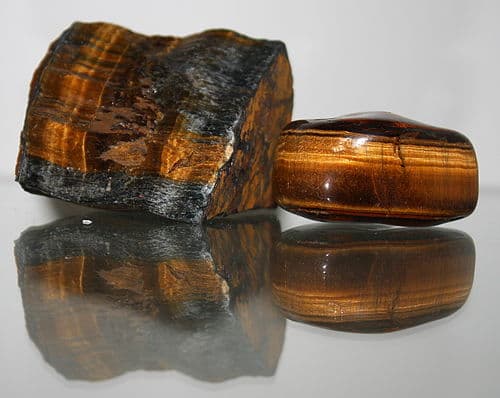
Tiger's Eye
South Africa
The chatoyant golden-brown stone of courage and discernment, worn as a charm for sharp perception, confident action, and the focused power of the predator's gaze.
4.7Learn more →


The bold orange stone of vitality and creative courage, carried as a charm for motivation, artistic inspiration, and the passionate pursuit of action.
Carnelian is an orange to red-orange variety of chalcedony (microcrystalline quartz), coloured by iron oxide. Its warm, bold colour has made it one of the most beloved gemstones across human history — it appears in ancient Egyptian jewellery from 3100 BCE, in Mesopotamian cylinder seals, in Viking jewellery, in Islamic calligraphy rings (the Prophet Muhammad reportedly wore a carnelian set in silver), and in the signet rings of Roman emperors. Carnelian does not accept wax as an impression when used as a seal, making it historically practical as well as beautiful.
In ancient Egypt, carnelian was associated with the setting sun and with Isis, the great mother goddess. It was placed on mummies to protect the deceased's passage through the underworld and to ensure rebirth. Its orange-red colour linked it to blood, to the vitality of the body, and to the creative fire of the sacral chakra — the energy centre of sexuality, creativity, and passionate engagement with life. Warriors wore it for courage in battle; artists wore it for creative fire; speakers wore it for the courage to say what needed to be said.
In contemporary crystal work, carnelian is the premier stone for overcoming procrastination, fear of action, and creative blocks. It ignites motivation, supports physical vitality, encourages bold creative expression, and gives the holder the courage to begin. If there is something you know you should do but keep postponing, carnelian is the crystal that will light a fire under the intention.
Creative courage, motivated action, physical vitality, overcoming procrastination, passionate engagement with life, and the bold expression of one's authentic creative vision.
Place on the desk when beginning a creative project or any task you have been procrastinating. Wear as a pendant or bracelet when you need motivation and physical energy. Hold in the non-dominant hand during creative work to keep inspiration flowing. Carry to auditions, performances, or any public display of creative work.
Napoleon Bonaparte found a large carnelian seal in Egypt during his 1798 campaign and wore it throughout his life as his most prized personal talisman. After his defeat and exile, it passed to his nephew Napoleon III and is now in the Louvre collection — the most historically documented lucky charm of any world leader.
Yes — its sacral chakra association links it to reproductive energy in both creative and literal biological senses. It has been used in fertility rituals across multiple cultures. Place on the lower abdomen during meditation if working with fertility intentions.
It is one of the traditional stones for overcoming stage fright and finding the courage to speak with conviction. Wearing carnelian at the throat or holding it before presenting helps access the motivated, passionate energy needed for effective public communication.
Unlike many stones, carnelian is traditionally said to be self-cleansing and can actually cleanse other stones placed near it. However, periodic cleansing in running water or sunlight will maintain its vibrant energy if it feels depleted.
South Africa
The chatoyant golden-brown stone of courage and discernment, worn as a charm for sharp perception, confident action, and the focused power of the predator's gaze.

Brazil
The golden abundance crystal, known as the Merchant's Stone, carried to attract wealth, success, and the warm energy of solar prosperity.

Myanmar
The King of Gems, worn as the supreme charm of passionate love, life-force vitality, and the courageous fire of the fully living heart.

